Pre Header

  • FAQ
  • Permits and District Business
  • Valley Water Websites
Home

Main navigation

    • FAQ
    • Permits and District Business
    • Valley Water Websites
  • For Residents
    Highlights
    Access Valley Water
    Easily send requests, reports or feedback directly to helpful district staff.
    Rebates & Surveys
    Programs and rebates helping you save water and money.
    Water Conservation
    Learn the best ways to save water indoors and outdoors.
    Current Water Charges
    Valley Water is funded by property taxes, well owners, agricultural water customers and water retailers like San Jose Water Company
    Emergency & Planning
    Flood Emergency Action Plans
    Drought Information
    Local Hazard Mitigation Plan
    Get Flood Ready
    Preparation for Extended Power Outages
    Alert System Real Time Data*
    Levee Safety
    Save Water & Money
    Rebates & Surveys
    Watersavings.org
    Current Water Charges
    Water Savings Videos
    Indoor Conservation
    Outdoor Conservation
    Projects & Plans
    Projects In Your Neighbourhood
    Creek & River Projects
    Dam & Reservoir Projects
    Grants and Environmental Protection
    Infrastructure Improvement Projects
    Climate Change Action Plan
    Safe, Clean Water and Natural Flood Protection Programs
    Studies and Reports
    Hydraulic Model Data (HEC)
    Stream Maintenance Program
  • Your Water
    Highlights
    Access Valley Water
    Easily send requests, reports or feedback directly to helpful district staff.
    Current Water Charges
    Valley Water is funded by property taxes, well owners, agricultural water customers and water retailers like San Jose Water Company
    Rebates & Surveys
    Programs and rebates helping you save water and money.
    Water Conservation
    Learn the best ways to save water indoors and outdoors.
    Water Sources
    Groundwater
    Imported Water
    Local Dams and Reservoirs
    Recycled and Purified Water
    Where your water comes from
    Information & Resources
    GIS Data
    Glossary of Water Terms
    District Library
    Popular Documents and Data
    Local Dams and Reservoirs
    Water Planning
    Water Supply Master Plan
    Water Supply Planning
    Water Treatment
    Water Treatment Plants
    Water Quality
  • Learning Center
    Highlights
    Access Valley Water
    Easily send requests, reports or feedback directly to helpful district staff.
    Rebates & Surveys
    Programs and rebates helping you save water and money.
    Water Conservation
    Learn the best ways to save water indoors and outdoors.
    Current Water Charges
    Valley Water is funded by property taxes, well owners, agricultural water customers and water retailers like San Jose Water Company
    Learning & Exploration
    Next Gen Career Pathways Program
    Water Education programs and Events
    Water 101 Academy
    Public Tours
    Local Dams and Reservoirs
    Volunteer Engagement
    Volunteer and Engage
    Valley Water Youth
    Commission
    Adopt a Creek
    Grants & Partnerships
    Public Art
    Environmental Science & Conservation
    Healthy Creeks and Ecosystems
    Watersheds of Santa Clara Valley
    The Water Treatment Process
    Aerial Drone Pilot Program
  • News & Events
    Highlights
    District News
    Learn more about the latest headlines and announcements from around the district
    Events
    Find district events happening on variety of topics
    Valley Water News Blog
    Catch up on all the latest list of articles and blog posts
    Videos
    Stay up to date with the latest videos from the district
    Public Records
    Public Records feature many commonly requested documents and data sets.
    Recent News
    Image
    Box culvert in West Little Llagas Creek
    A look at a completed flood wall as part of the Coyote Creek Flood Management Measures Project.
    January 23, 2026
    Valley Water’s annual Capital Improvement Program: Projects to reduce flood risk 

    Editor’s Note: This is the first in a three-part series highlighting some of the projects included in the Capital Improvement Program Fiscal Year 2027-2031 Preliminary Five-Year Plan.

    Read More
    Image
    Valley Water completes erosion repair project along Saratoga Creek in fall 2025
    January 21, 2026
    Providing flood protection through ongoing stream maintenance projects

    Each summer, under the Stream Maintenance Program (SMP), Valley Water takes important steps to protect neighborhoods from flooding. Over time, sediment can accumulate in creeks, reducing their capacity to carry stormwater. During heavy rains, this can lead to an increased risk of flooding for nearby homes, roads and businesses.

    Read More
    Image
    Mockups Design
    January 7, 2026
    Discover how Valley Water is building climate resilience; read the latest biennial report

    Valley Water’s mission is to provide safe, clean water, protect against flooding, and care for local streams. Climate change is affecting this mission. Rising temperatures, changing rainfall patterns, more severe droughts, a declining Sierra Nevada snowpack and rising sea levels all impact water reliability, infrastructure, and ecosystem health throughout Santa Clara County.

    Read More
  • About Valley Water
    Highlights
    Mission, Vision and Values
    Learn about our core mission, vision for the future, and the values that guide us
    Board of Directors
    Meet the board members who provide leadership and oversight for the district
    Finance/Budget
    Access financial information, budgets, and fiscal reports for transparency
    Committees
    Explore our various committees and their roles in district governance
    Board Meetings, Agendas & Minutes
    Review meeting schedules, agendas, and official minutes from board meetings
    Leadership
    Board of Directors
    Board Meetings Agendas & Minutes
    Committees
    Redistricting
    Board Governance Policies
    Accountability
    Public Records
    Lobbyist Ordinance
    Grand Jury Reports
    Enterprise Systems
    Information & Resources
    Finance/Budget
    Capital Improvement Program
    Public Facilities Financing Corporation
    Community Engagement
    Renewed Safe, Clean Water & Natural Flood Protection: Independent Monitoring Committee
    Committees
    Community Partnering Sponsorship Program
  • Services and Support
Loading…
Home

Main navigation

    • FAQ
    • Permits and District Business
    • Valley Water Websites
  • For Residents
    Highlights
    Access Valley Water
    Easily send requests, reports or feedback directly to helpful district staff.
    Rebates & Surveys
    Programs and rebates helping you save water and money.
    Water Conservation
    Learn the best ways to save water indoors and outdoors.
    Current Water Charges
    Valley Water is funded by property taxes, well owners, agricultural water customers and water retailers like San Jose Water Company
    Emergency & Planning
    Flood Emergency Action Plans
    Drought Information
    Local Hazard Mitigation Plan
    Get Flood Ready
    Preparation for Extended Power Outages
    Alert System Real Time Data*
    Levee Safety
    Save Water & Money
    Rebates & Surveys
    Watersavings.org
    Current Water Charges
    Water Savings Videos
    Indoor Conservation
    Outdoor Conservation
    Projects & Plans
    Projects In Your Neighbourhood
    Creek & River Projects
    Dam & Reservoir Projects
    Grants and Environmental Protection
    Infrastructure Improvement Projects
    Climate Change Action Plan
    Safe, Clean Water and Natural Flood Protection Programs
    Studies and Reports
    Hydraulic Model Data (HEC)
    Stream Maintenance Program
  • Your Water
    Highlights
    Access Valley Water
    Easily send requests, reports or feedback directly to helpful district staff.
    Current Water Charges
    Valley Water is funded by property taxes, well owners, agricultural water customers and water retailers like San Jose Water Company
    Rebates & Surveys
    Programs and rebates helping you save water and money.
    Water Conservation
    Learn the best ways to save water indoors and outdoors.
    Water Sources
    Groundwater
    Imported Water
    Local Dams and Reservoirs
    Recycled and Purified Water
    Where your water comes from
    Information & Resources
    GIS Data
    Glossary of Water Terms
    District Library
    Popular Documents and Data
    Local Dams and Reservoirs
    Water Planning
    Water Supply Master Plan
    Water Supply Planning
    Water Treatment
    Water Treatment Plants
    Water Quality
  • Learning Center
    Highlights
    Access Valley Water
    Easily send requests, reports or feedback directly to helpful district staff.
    Rebates & Surveys
    Programs and rebates helping you save water and money.
    Water Conservation
    Learn the best ways to save water indoors and outdoors.
    Current Water Charges
    Valley Water is funded by property taxes, well owners, agricultural water customers and water retailers like San Jose Water Company
    Learning & Exploration
    Next Gen Career Pathways Program
    Water Education programs and Events
    Water 101 Academy
    Public Tours
    Local Dams and Reservoirs
    Volunteer Engagement
    Volunteer and Engage
    Valley Water Youth
    Commission
    Adopt a Creek
    Grants & Partnerships
    Public Art
    Environmental Science & Conservation
    Healthy Creeks and Ecosystems
    Watersheds of Santa Clara Valley
    The Water Treatment Process
    Aerial Drone Pilot Program
  • News & Events
    Highlights
    District News
    Learn more about the latest headlines and announcements from around the district
    Events
    Find district events happening on variety of topics
    Valley Water News Blog
    Catch up on all the latest list of articles and blog posts
    Videos
    Stay up to date with the latest videos from the district
    Public Records
    Public Records feature many commonly requested documents and data sets.
    Recent News
    Image
    Box culvert in West Little Llagas Creek
    A look at a completed flood wall as part of the Coyote Creek Flood Management Measures Project.
    January 23, 2026
    Valley Water’s annual Capital Improvement Program: Projects to reduce flood risk 

    Editor’s Note: This is the first in a three-part series highlighting some of the projects included in the Capital Improvement Program Fiscal Year 2027-2031 Preliminary Five-Year Plan.

    Read More
    Image
    Valley Water completes erosion repair project along Saratoga Creek in fall 2025
    January 21, 2026
    Providing flood protection through ongoing stream maintenance projects

    Each summer, under the Stream Maintenance Program (SMP), Valley Water takes important steps to protect neighborhoods from flooding. Over time, sediment can accumulate in creeks, reducing their capacity to carry stormwater. During heavy rains, this can lead to an increased risk of flooding for nearby homes, roads and businesses.

    Read More
    Image
    Mockups Design
    January 7, 2026
    Discover how Valley Water is building climate resilience; read the latest biennial report

    Valley Water’s mission is to provide safe, clean water, protect against flooding, and care for local streams. Climate change is affecting this mission. Rising temperatures, changing rainfall patterns, more severe droughts, a declining Sierra Nevada snowpack and rising sea levels all impact water reliability, infrastructure, and ecosystem health throughout Santa Clara County.

    Read More
  • About Valley Water
    Highlights
    Mission, Vision and Values
    Learn about our core mission, vision for the future, and the values that guide us
    Board of Directors
    Meet the board members who provide leadership and oversight for the district
    Finance/Budget
    Access financial information, budgets, and fiscal reports for transparency
    Committees
    Explore our various committees and their roles in district governance
    Board Meetings, Agendas & Minutes
    Review meeting schedules, agendas, and official minutes from board meetings
    Leadership
    Board of Directors
    Board Meetings Agendas & Minutes
    Committees
    Redistricting
    Board Governance Policies
    Accountability
    Public Records
    Lobbyist Ordinance
    Grand Jury Reports
    Enterprise Systems
    Information & Resources
    Finance/Budget
    Capital Improvement Program
    Public Facilities Financing Corporation
    Community Engagement
    Renewed Safe, Clean Water & Natural Flood Protection: Independent Monitoring Committee
    Committees
    Community Partnering Sponsorship Program
  • Services and Support
Loading…
  • Report Water Waste
  • Landscape Guides & Resources
  • Sprinklers & Irrigation
    • Valley Water Irrigation Scheduler
  • Rainwater Harvesting Systems
  • About Graywater
  • Water Wise Garden Examples
  • Workshops & Events

Breadcrumb

  1. Home
  2. Drought/Saving Water
  3. Outdoor Conservation
  4. Sprinklers & Irrigation

Sprinklers & Irrigation

Content

As much as 50 percent of the water we use outdoors is wasted due to inefficient irrigation methods and systems (EPA WaterSense). We're here to help you upgrade your irrigation to let you do more using less water!

Rebates Available

Valley Water’s Landscape Rebate Program offers Irrigation Equipment Upgrades for efficient landscape irrigation, including: 

  • Smart irrigation controller upgrade and rain sensors to help irrigate only when your landscape needs it
     
  • Flow sensors and hydrometers to help identify and locate leaks 
     
  • High-efficiency spray bodies and nozzles to apply less water and reduce run-off while irrigating 
     
  • In-line drip irrigation conversion to apply less water and irrigate only where you need it 

Rebates for irrigation equipment upgrades

Not sure which upgrades may be right for you? The following resources can help reduce water waste by increasing irrigation efficiency.

Landscape Irrigation Best Practices
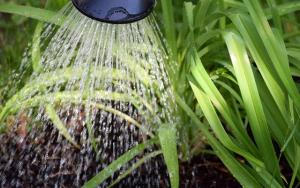
  • Remove or downsize lawn. Switch out high-water use lawns to low-water use plants more appropriate to California’s dry climate by applying for the landscape conversion rebate. 

  • Minimize evaporation. Water between 9 p.m. and 6 a.m. to avoid the hottest times of the day and to remain in compliance with Valley Water’s Water Waste Ordinance which prohibits irrigation outside of these times. Maintaining a 2–3-inch layer of organic mulch around plants and over bare soil holds moisture in the soil and reduces loss to evaporation. 

  • Eliminate runoff. Check your irrigation system frequently and adjust sprinklers and/or emitters for overspray and runoff. Many irrigation systems apply water at a faster rate than the soil can soak it in.  Give the soil a chance to absorb the water and avoid runoff by dividing your watering into multiple shorter cycles per day instead of one long run time. This practice, known as “cycle and soak” allows water to soak in before more water is added (EPS WaterSense).  

  • Practice hydro-zoning. Group plants with similar water needs in hydro-zones, and water the zones independently of zones with different water needs. In addition, different irrigation equipment types, such as sprinklers and drip irrigation, should not be mixed in one zone or valve. Hydrozones allow plants to receive only as much water as they need and can protect them from being over or under-irrigated as a result of being grouped with plants that do not share the same water needs.  

  • Water deeply and only when needed. Water plants deeply but less frequently to create healthier, stronger landscapes. Santa Barbara offers this 7-minute overview of how to deep water trees so, they stay healthy and hydrated while using less water. Using a screwdriver or moisture meters as a soil probe, test the soil moisture. If it's moist, you probably do not need to irrigate. Install a rain shut-off device on your automatic sprinklers to eliminate unnecessary watering as well. Learn more about Valley Water's rebate for installing rain sensors and smart controllers so your equipment will figure this out for you automatically! 

  • Create a water budget. A more technical and specialized yet effective method to balance water use and landscape needs, the water budget considers the landscape area, plant type, plant water needs, irrigation system design and efficiency, and real-time water that the landscape receives either by irrigation or precipitation. Water budgets must be associated with a specified amount of time, such as a week, month, or year. Commercial and multi-family properties and landscapers can get help creating a water budget at Waterfluence.com, if they pre-qualify they may be eligible for assistance through the Large Landscape Program.

Overhead Sprinklers vs. Drip Irrigation

There are two main types of irrigation to water plants – overhead sprinklers and low-flow drip irrigation.  

Overhead Sprinklers– Also referred to as “sprayheads” or simply “sprinklers”, overhead sprinklers water the entire landscape area from above, showering plants.. Water output is calculated in gallons per minute (GPM) or inches per hour and is applied at a much faster rate than drip irrigation. Sprinklers are commonly recommended only for lawns and certain turf-like groundcovers that need 100% irrigation coverage. Sprinklers are generally less efficient than drip irrigation as there is more opportunity for water to end up outside of the desired landscape irrigation area.  Water loss to overspray, runoff, misting, and wind is common with sprinklers.

High-efficiency sprinklers apply water at a slower rate than conventional sprinklers—by applying less water per minute, they tend to have longer run times while still using less water overall than conventional sprinklers. High-efficiency sprinklers are an appropriate alternative if drip irrigation isn’t an option as they produce less overspray and runoff than conventional sprinklers. Valley Water offers rebates to upgrade from conventional to high-efficiency sprinklers. 

Drip Irrigation– Most plants, other than lawn and certain ground covers, are best suited for drip irrigation, not spray. More efficient than spray sprinklers; it is targeted and uniform watering. Water “drips” or “trickles” directly to the plant’s root zone at a controlled flow rate. You are not watering the leaves, the space between the plants, or worse, watering the sidewalk or letting the water gush into the gutter. Drip irrigation is better for plant health because it waters plants slow and deep where the roots are. You will likely minimize weed growth, and by not watering the leaves of your plants or allowing them to collect standing water, you can reduce the occurrence of diseases.  

Drip irrigation falls into two categories, which are measured in gallons per hour (GPH):

  1. Point Source 
  2. In-Line (also referred to as line source). Valley Water offers spray to in-line drip conversion rebates. 

Refer to pages 35-37 of the Sustainable Landscape Design Guide for details on setting up a conversion to from overhead sprinklers to drip irrigation. Some initial tips include: 

  • When you design and install in-line drip irrigation in a new planting area, you might consider spare planting to start with as plants fill in all the blank space as they grow. 
  • If you are converting from spray to drip in an established garden, it is best to do this when you have pruned the perennials back so that you can lay down the lines at the root zone. 

For more information on drip irrigation, please refer to Valley Water’s Drip Irrigation Basics webinar. 

Irrigation Controllers & Scheduling

Sometimes referred to as timers or irrigation clocks, an irrigation controller is a device that operates automatic irrigation systems, such as lawn sprinklers and drip irrigation systems. Irrigation controllers help you adjust your irrigation schedule to avoid overwatering, increased cost and maintenance, and property damage. Most controllers have a means of setting the frequency of irrigation, the start time, and the duration of watering.

Irrigation controllers can be as simple as a clock (inefficient), can connect to your phone, or only irrigate when needed based on soil moisture or local weather stations (very efficient). Upgrade from a conventional controller to a Weather Based Irrigation Controller https://scvwd.dropletportal.com/ with help from a rebate. 

The following provides interactive tools and resources to learn how to take the information on this page into action to increase the efficiency of your property.

Creating an accurate irrigation schedule can be difficult, but Valley Water has created a powerful irrigation scheduling tool to help take the guesswork out of how much your landscape should be irrigated.  This free tool, available to landscapes throughout California, will assist you in creating accurate, water-conserving irrigation schedules for either your conventional or smart controller.

The Valley Water Irrigation Scheduler uses historical weather data based on your site location, along with landscape-specific inputs, such as plant type, irrigation equipment, and sun exposure, to calculate a custom irrigation schedule for your California landscape.  The Irrigation Scheduler can also accommodate drought watering restrictions, such as days per week watering limitations.

Get started to create your custom irrigation schedule at Valleywaterscheduler.com!

  • The Association of California Water Agencies web portal is a one-stop-shop for homeowners and professionals looking for information and online resources on water-efficient irrigation. Homeowners will find easy-to-understand information about how residential sprinkler systems work, information on drip irrigation and other smart ways to reduce landscape water use. The portal was created as part of the association's Save Our Water campaign. 

  • For irrigation professionals, the Irrigation Association has a wealth of irrigation information including online learning, videos and webinars, and technical resources. 

  • Find local irrigation supply stores that carry water-efficient irrigation equipment. 

  • Learn how to adjust your landscape irrigation to reduce water use and comply with Valley Water's 2 day per week watering ordinance using the Drought Irrigation Schedule. 

  • From basics to guidelines, to water-efficient technology to help you schedule your irrigation system, from the California Water Efficient Partnership. 

  • Check out how to program your irrigation controller from Pasadena Water and Power. This quick overview will coach you the irrigation controller essentials in less than 5 minutes!

Lawn Care

Lawns can be the single biggest water user for a typical property; a small lawn can use more than 18,000 gallons a year. That means lawns offer the greatest potential for water savings! Find tips for reducing water use and caring for your lawn on our Landscape Guides and Resources page.

Lawn care tips

Footer Top

    Valley Water Logo
  • Report an Issue
  • Contact Us
  • Services & Support
  • Join our Newsletter
    Valley Water Logo
  • Join our Newsletter
  • Report an Issue
  • Contact Us
  • Services & Support

Footer

  • For Residents
    • Water Charges
    • Grants and Rebates
    • Water Conservation
    • Projects and Plans
    • Outdoor Survey
    • Watersavings.org
    • Water Quality
    • Water Supply Planning
  • In an Emergency
    • Get Flood Ready
    • Levee Safety
    • Dam Safety Program
    • Flood Emergency Action Plan
    • Local Hazard Mitigation Area
    • Climate Change Action Plan
  • Data & Resources
    • GIS Data
    • Popular Documents
    • HEC-2 Data Library
    • Surface Water Data Portal
    • Water Sensor ALERT
    • Find My Water Retailer
  • About Valley Water
    • Finance & Budget
    • Board of Directors
    • Board Meetings & Agendas
    • Committees
    • Board Governance Policies
    • Careers
    • Internships
  • In the District
    • Permits
    • Report a Problem
    • Contact Us
    • Purchasing and Contracts
    • Construction Administration
    • Business Resources
  • Learning Center
    • Water 101 Academy
    • Public Tours
    • Adopt a Creek
Santa Clara Valley Water District 2025
Pollution Hotline 888-510-5151
Phone: 408-265-2600