Stream Maintenance Program
As part of its Stream Maintenance Program (SMP), the Santa Clara Valley Water District (Valley Water) plans to perform work along creeks across Santa Clara County this summer. Under the SMP, work occurs annually to improve the environment, reduce the risk of flooding and keep our communities safe. For decades, our crews have been trekking into streams to remove sediment build-up, manage vegetation, clear trash and debris, and stabilize banks that have eroded during high water flows. Work to reduce fire danger continues to be important, especially given the county’s extreme drought conditions and the ongoing challenges of climate change. The SMP ensures streams with completed flood protection projects continue to function as designed to protect homes and businesses.
Valley Water owns and manages about 333 miles of streams. Each year, portions of these streams are inspected and prioritized for maintenance projects.
- Under the "News and Updates" tab below, you'll find information on this year's projects.
- Under the "Reports and Document" tab below, you'll find various notices, factsheets and documents related to SMP.
- Under the "Environmental and Community Benefits" and "History and Backgrounds" tabs below, you'll find more background about the program.
To report a concern about a creek under Valley Water's jurisdiction, please use our customer service system, Access Valley Water, or call Watersheds Operations at 408-630-2378. To learn more about the responsibility of creek ownership, click here for our fact sheet.
2025 Projects Completed*
The projects listed here were part of the 2025 season’s proposed work. Other work, including minor maintenance, riparian planting, invasive plant removal, and other vegetation management projects, occur year-round. The proposed 2025 project sites are listed to the right. A copy of the 2025 SMP mailer is available to download. Notices from previous years and important creekside information are available in the "Reports and Documents" tab.
NEW for 2025: We created an interactive map that allows you to search and view the sites where work was proposed and completed for this SMP season.
Want to see our crews in action?
Click on the "Keeping Streams Ready for Winter Storms" article in the Valley Water News blog, where you'll see a time-lapse video of crews removing sediment from Matadero Creek and learn more about this season's work.
Potential Types of Stream Maintenance Program Work
Bank Protection
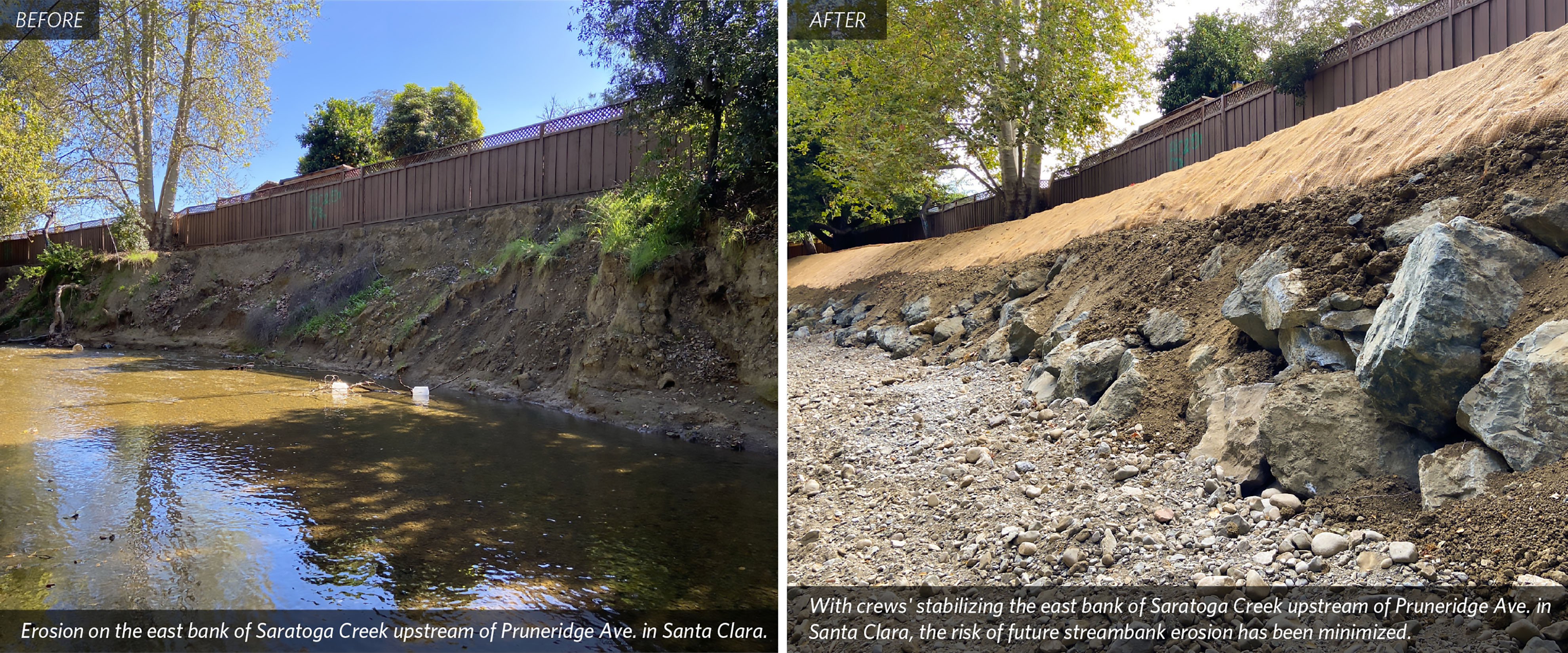
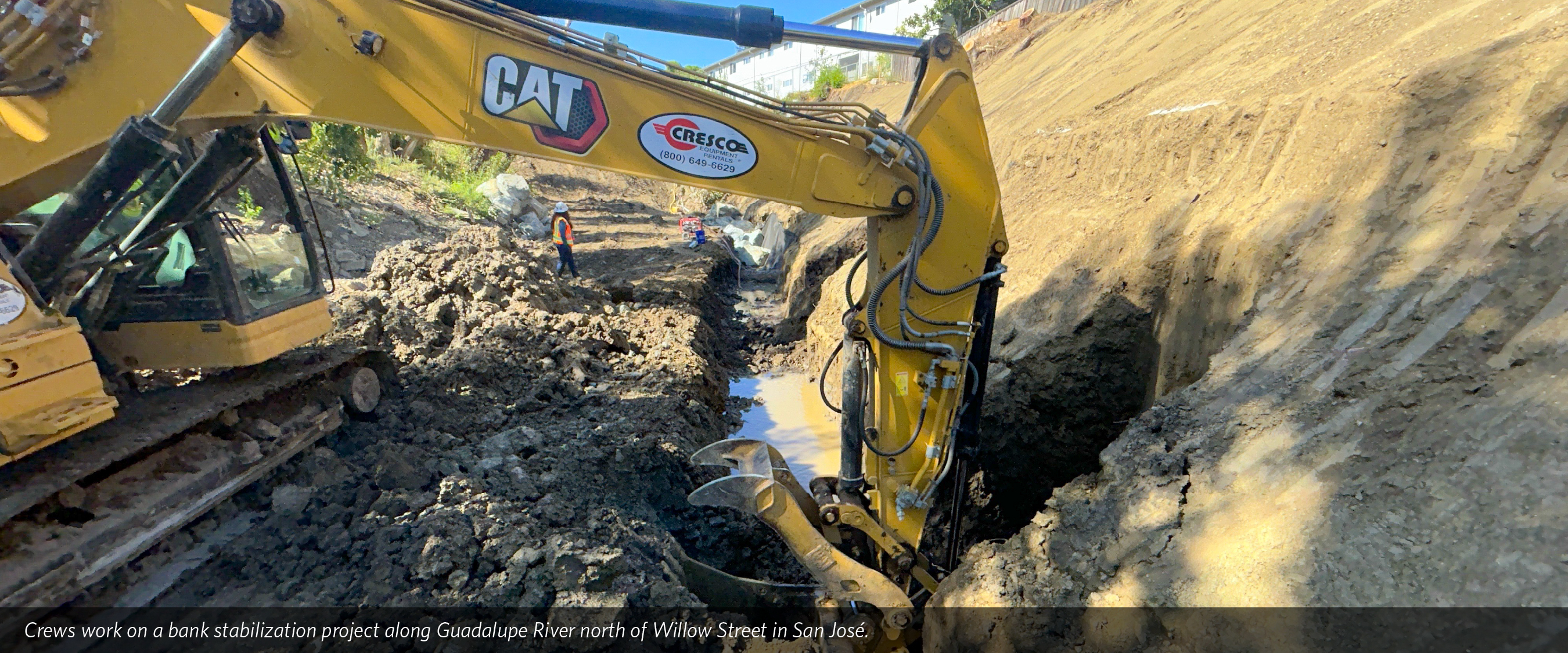
High and sustained water flows can cause extensive damage to creek banks, eroding existing flood protection improvements and natural elements. Repairing creek banks also helps protect neighboring homes and property from damage.
Sediment Removal
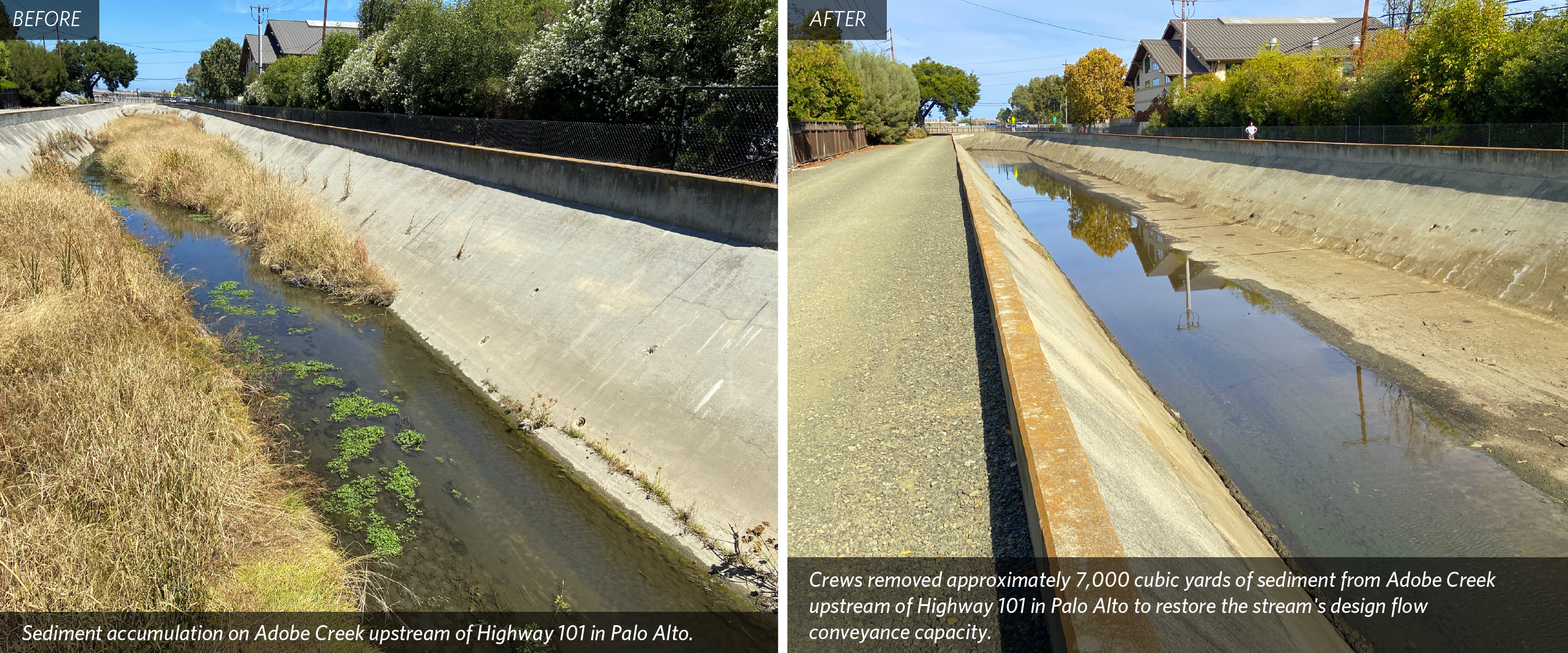
Sediment and debris washed downstream can restrict water flow in some areas. During a heavy storm, these restricted flow areas could cause water to back up, which can increase the risk of flooding. Crews remove sediment to allow stormwater to flow through the creeks as designed. To the extent possible, Valley Water reuses sediment for environmental purposes and to reduce disposal costs.
Vegetation Management
Valley Water crews manage over 3,000 acres of instream and upland vegetation annually. Selective removal of instream vegetation maintains flow conveyance in streams and riparian corridors. Managing upland vegetation restores maintenance access and maintains fire code compliance, given the county’s cyclical dry conditions and the ongoing challenges of climate change. Valley Water’s vegetation management work is crucial in helping to reduce fire risk.
Mitigation
Valley Water implements mitigation projects to offset impacts associated with some of the bank protection, sediment removal, and vegetation management work. Mitigation projects can include:
- Riparian planting: Enhances and establishes habitat for birds, amphibians, fish, and other terrestrial and aquatic species living in creek corridors to compensate for the unavoidable riparian impacts created by sediment removal, bank protection, and vegetation management activities. Invasive and non-native annuals and grasses that compete with native plants are removed. Vegetation that meets the habitat needs of the project site with the highest likelihood of surviving and thriving is planted. Valley Water monitors and maintains riparian planting areas for five to seven years to ensure projects are successful.
- Invasive plant management: Plant species such as Algerian ivy, Cape ivy, Himalayan blackberry, tree of heaven, and giant reed, are removed because they present a significant threat to the ecosystem. These plants spread aggressively and can negatively alter wildlife patterns, soil stability, and water quality. Invasive plants can increase the risk of flooding and fire danger, undermine structural assets, and obstruct access to roads, levees, and trails.
- Instream habitat improvement: Work is done to address the impacts of removing sediment and large woody debris from certain streams. This can include adding rocks and logs or root wads to the creek to create a higher-quality habitat for fish and other species.
- Compensatory mitigation: This is the restoration, establishment, enhancement, or preservation of natural resources to replace resources impacted by maintenance activities. In addition to the above work types, compensatory mitigation may include the restoration of existing floodplains and bank rehabilitation by remediating unauthorized excavations, concrete removal, and sediment removal to promote wetland habitat.
*While Valley Water will make every effort to undertake on these proposed projects, please note that work may not occur for multiple reasons, including delays in regulatory agencies’ approvals, wildlife considerations, unforeseen site conditions, and unavailability of resources, among other circumstances. Projects not initiated this year may be considered for completion in future years.
Below are images of before and after projects from the 2024 season of work.