Pre Header

  • FAQ
  • Permits and District Business
  • Valley Water Websites
Home

Main navigation

    • FAQ
    • Permits and District Business
    • Valley Water Websites
  • For Residents
    Highlights
    Access Valley Water
    Easily send requests, reports or feedback directly to helpful district staff.
    Rebates & Surveys
    Programs and rebates helping you save water and money.
    Water Conservation
    Learn the best ways to save water indoors and outdoors.
    Current Water Charges
    Valley Water is funded by property taxes, well owners, agricultural water customers and water retailers like San Jose Water Company
    Emergency & Planning
    Flood Emergency Action Plans
    Drought Information
    Local Hazard Mitigation Plan
    Get Flood Ready
    Preparation for Extended Power Outages
    Alert System Real Time Data*
    Levee Safety
    Save Water & Money
    Rebates & Surveys
    Watersavings.org
    Current Water Charges
    Water Savings Videos
    Indoor Conservation
    Outdoor Conservation
    Projects & Plans
    Projects In Your Neighbourhood
    Creek & River Projects
    Dam & Reservoir Projects
    Grants and Environmental Protection
    Infrastructure Improvement Projects
    Climate Change Action Plan
    Safe, Clean Water and Natural Flood Protection Programs
    Studies and Reports
    Hydraulic Model Data (HEC)
    Stream Maintenance Program
  • Your Water
    Highlights
    Access Valley Water
    Easily send requests, reports or feedback directly to helpful district staff.
    Current Water Charges
    Valley Water is funded by property taxes, well owners, agricultural water customers and water retailers like San Jose Water Company
    Rebates & Surveys
    Programs and rebates helping you save water and money.
    Water Conservation
    Learn the best ways to save water indoors and outdoors.
    Water Sources
    Groundwater
    Imported Water
    Local Dams and Reservoirs
    Recycled and Purified Water
    Where your water comes from
    Information & Resources
    GIS Data
    Glossary of Water Terms
    District Library
    Popular Documents and Data
    Local Dams and Reservoirs
    Water Planning
    Water Supply Master Plan
    Water Supply Planning
    Water Treatment
    Water Treatment Plants
    Water Quality
  • Learning Center
    Highlights
    Access Valley Water
    Easily send requests, reports or feedback directly to helpful district staff.
    Rebates & Surveys
    Programs and rebates helping you save water and money.
    Water Conservation
    Learn the best ways to save water indoors and outdoors.
    Current Water Charges
    Valley Water is funded by property taxes, well owners, agricultural water customers and water retailers like San Jose Water Company
    Learning & Exploration
    Next Gen Career Pathways Program
    Water Education programs and Events
    Water 101 Academy
    Public Tours
    Local Dams and Reservoirs
    Volunteer Engagement
    Volunteer and Engage
    Valley Water Youth
    Commission
    Adopt a Creek
    Grants & Partnerships
    Public Art
    Environmental Science & Conservation
    Healthy Creeks and Ecosystems
    Watersheds of Santa Clara Valley
    The Water Treatment Process
    Aerial Drone Pilot Program
  • News & Events
    Highlights
    District News
    Learn more about the latest headlines and announcements from around the district
    Events
    Find district events happening on variety of topics
    Valley Water News Blog
    Catch up on all the latest list of articles and blog posts
    Videos
    Stay up to date with the latest videos from the district
    Public Records
    Public Records feature many commonly requested documents and data sets.
    Recent News
    Image
    Box culvert in West Little Llagas Creek
    A look at a completed flood wall as part of the Coyote Creek Flood Management Measures Project.
    January 23, 2026
    Valley Water’s annual Capital Improvement Program: Projects to reduce flood risk 

    Editor’s Note: This is the first in a three-part series highlighting some of the projects included in the Capital Improvement Program Fiscal Year 2027-2031 Preliminary Five-Year Plan.

    Read More
    Image
    Valley Water completes erosion repair project along Saratoga Creek in fall 2025
    January 21, 2026
    Providing flood protection through ongoing stream maintenance projects

    Each summer, under the Stream Maintenance Program (SMP), Valley Water takes important steps to protect neighborhoods from flooding. Over time, sediment can accumulate in creeks, reducing their capacity to carry stormwater. During heavy rains, this can lead to an increased risk of flooding for nearby homes, roads and businesses.

    Read More
    Image
    Mockups Design
    January 7, 2026
    Discover how Valley Water is building climate resilience; read the latest biennial report

    Valley Water’s mission is to provide safe, clean water, protect against flooding, and care for local streams. Climate change is affecting this mission. Rising temperatures, changing rainfall patterns, more severe droughts, a declining Sierra Nevada snowpack and rising sea levels all impact water reliability, infrastructure, and ecosystem health throughout Santa Clara County.

    Read More
  • About Valley Water
    Highlights
    Mission, Vision and Values
    Learn about our core mission, vision for the future, and the values that guide us
    Board of Directors
    Meet the board members who provide leadership and oversight for the district
    Finance/Budget
    Access financial information, budgets, and fiscal reports for transparency
    Committees
    Explore our various committees and their roles in district governance
    Board Meetings, Agendas & Minutes
    Review meeting schedules, agendas, and official minutes from board meetings
    Leadership
    Board of Directors
    Board Meetings Agendas & Minutes
    Committees
    Redistricting
    Board Governance Policies
    Accountability
    Public Records
    Lobbyist Ordinance
    Grand Jury Reports
    Enterprise Systems
    Information & Resources
    Finance/Budget
    Capital Improvement Program
    Public Facilities Financing Corporation
    Community Engagement
    Renewed Safe, Clean Water & Natural Flood Protection: Independent Monitoring Committee
    Committees
    Community Partnering Sponsorship Program
  • Services and Support
Loading…
Home

Main navigation

    • FAQ
    • Permits and District Business
    • Valley Water Websites
  • For Residents
    Highlights
    Access Valley Water
    Easily send requests, reports or feedback directly to helpful district staff.
    Rebates & Surveys
    Programs and rebates helping you save water and money.
    Water Conservation
    Learn the best ways to save water indoors and outdoors.
    Current Water Charges
    Valley Water is funded by property taxes, well owners, agricultural water customers and water retailers like San Jose Water Company
    Emergency & Planning
    Flood Emergency Action Plans
    Drought Information
    Local Hazard Mitigation Plan
    Get Flood Ready
    Preparation for Extended Power Outages
    Alert System Real Time Data*
    Levee Safety
    Save Water & Money
    Rebates & Surveys
    Watersavings.org
    Current Water Charges
    Water Savings Videos
    Indoor Conservation
    Outdoor Conservation
    Projects & Plans
    Projects In Your Neighbourhood
    Creek & River Projects
    Dam & Reservoir Projects
    Grants and Environmental Protection
    Infrastructure Improvement Projects
    Climate Change Action Plan
    Safe, Clean Water and Natural Flood Protection Programs
    Studies and Reports
    Hydraulic Model Data (HEC)
    Stream Maintenance Program
  • Your Water
    Highlights
    Access Valley Water
    Easily send requests, reports or feedback directly to helpful district staff.
    Current Water Charges
    Valley Water is funded by property taxes, well owners, agricultural water customers and water retailers like San Jose Water Company
    Rebates & Surveys
    Programs and rebates helping you save water and money.
    Water Conservation
    Learn the best ways to save water indoors and outdoors.
    Water Sources
    Groundwater
    Imported Water
    Local Dams and Reservoirs
    Recycled and Purified Water
    Where your water comes from
    Information & Resources
    GIS Data
    Glossary of Water Terms
    District Library
    Popular Documents and Data
    Local Dams and Reservoirs
    Water Planning
    Water Supply Master Plan
    Water Supply Planning
    Water Treatment
    Water Treatment Plants
    Water Quality
  • Learning Center
    Highlights
    Access Valley Water
    Easily send requests, reports or feedback directly to helpful district staff.
    Rebates & Surveys
    Programs and rebates helping you save water and money.
    Water Conservation
    Learn the best ways to save water indoors and outdoors.
    Current Water Charges
    Valley Water is funded by property taxes, well owners, agricultural water customers and water retailers like San Jose Water Company
    Learning & Exploration
    Next Gen Career Pathways Program
    Water Education programs and Events
    Water 101 Academy
    Public Tours
    Local Dams and Reservoirs
    Volunteer Engagement
    Volunteer and Engage
    Valley Water Youth
    Commission
    Adopt a Creek
    Grants & Partnerships
    Public Art
    Environmental Science & Conservation
    Healthy Creeks and Ecosystems
    Watersheds of Santa Clara Valley
    The Water Treatment Process
    Aerial Drone Pilot Program
  • News & Events
    Highlights
    District News
    Learn more about the latest headlines and announcements from around the district
    Events
    Find district events happening on variety of topics
    Valley Water News Blog
    Catch up on all the latest list of articles and blog posts
    Videos
    Stay up to date with the latest videos from the district
    Public Records
    Public Records feature many commonly requested documents and data sets.
    Recent News
    Image
    Box culvert in West Little Llagas Creek
    A look at a completed flood wall as part of the Coyote Creek Flood Management Measures Project.
    January 23, 2026
    Valley Water’s annual Capital Improvement Program: Projects to reduce flood risk 

    Editor’s Note: This is the first in a three-part series highlighting some of the projects included in the Capital Improvement Program Fiscal Year 2027-2031 Preliminary Five-Year Plan.

    Read More
    Image
    Valley Water completes erosion repair project along Saratoga Creek in fall 2025
    January 21, 2026
    Providing flood protection through ongoing stream maintenance projects

    Each summer, under the Stream Maintenance Program (SMP), Valley Water takes important steps to protect neighborhoods from flooding. Over time, sediment can accumulate in creeks, reducing their capacity to carry stormwater. During heavy rains, this can lead to an increased risk of flooding for nearby homes, roads and businesses.

    Read More
    Image
    Mockups Design
    January 7, 2026
    Discover how Valley Water is building climate resilience; read the latest biennial report

    Valley Water’s mission is to provide safe, clean water, protect against flooding, and care for local streams. Climate change is affecting this mission. Rising temperatures, changing rainfall patterns, more severe droughts, a declining Sierra Nevada snowpack and rising sea levels all impact water reliability, infrastructure, and ecosystem health throughout Santa Clara County.

    Read More
  • About Valley Water
    Highlights
    Mission, Vision and Values
    Learn about our core mission, vision for the future, and the values that guide us
    Board of Directors
    Meet the board members who provide leadership and oversight for the district
    Finance/Budget
    Access financial information, budgets, and fiscal reports for transparency
    Committees
    Explore our various committees and their roles in district governance
    Board Meetings, Agendas & Minutes
    Review meeting schedules, agendas, and official minutes from board meetings
    Leadership
    Board of Directors
    Board Meetings Agendas & Minutes
    Committees
    Redistricting
    Board Governance Policies
    Accountability
    Public Records
    Lobbyist Ordinance
    Grand Jury Reports
    Enterprise Systems
    Information & Resources
    Finance/Budget
    Capital Improvement Program
    Public Facilities Financing Corporation
    Community Engagement
    Renewed Safe, Clean Water & Natural Flood Protection: Independent Monitoring Committee
    Committees
    Community Partnering Sponsorship Program
  • Services and Support
Loading…
  • Report Water Waste
  • Landscape Guides & Resources
  • Sprinklers & Irrigation
    • Valley Water Irrigation Scheduler
  • Rainwater Harvesting Systems
  • About Graywater
  • Water Wise Garden Examples
  • Workshops & Events

Breadcrumb

  1. Home
  2. Drought/Saving Water
  3. Outdoor Conservation
  4. About Graywater

About Graywater

Content
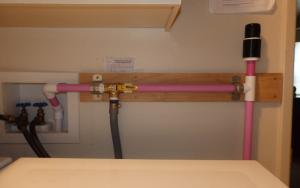
pipes

Graywater is lightly used water from clothes washers, showers, bathtubs, and bathroom sinks. It contains some soap and detergents but it’s a safe and effective water supply for most landscapes. 

Water from toilets or wash water from diapers is never considered graywater. Kitchen sink water is not considered graywater in California. Graywater is not the same as recycled water. Graywater should never be stored longer than 24 hours, unlike rainwater.

Learn what you need to know about starting a graywater project in the information and links below. Or get started by watching our four-part virtual graywater workshop. Valley Water offers a rebate for Laundry-to-Landscape systems up to $400!

Video: Virtual graywater workshop

Graywater system benefits and cost

With a graywater system, you can save water, time and money every time you wash a load of laundry or take a shower. It’s a reliable, local and drought-resilient water source to protect your landscape of hotter summers and drier winters.

Other benefits of include: 

  • Graywater can decrease water and wastewater utility bills, and extend the life of the septic system leach fields.
     
  • It connects us to our water supply, helping us understand where our water comes from and where it goes. Becoming conscious of our water supply encourages healthier product choices and engagement with our landscapes.
     
  • In concert with water conservation, climate-appropriate landscaping, and rainwater harvesting, using graywater helps reduce dependency on imported water and protects the urban watershed.

Put simply, irrigate a medium-water use tree with every load of laundry you send to your yard.

On average, Laundry-to-Landscape systems save between approximately 4,500 and 14,500 gallons per household a year! (2017 report by Alliance for Water Efficiency and 2012 report by Greywater Action in collaboration with the City of Santa Rosa and Ecology Action of Santa Cruz) This is enough water to irrigate 800 square feet of trees, shrubs, and vines in most climates. The actual amount of water you may end up saving from using graywater depends on:

  1. How much graywater you actually produce 
     
  2. How much water you use in your landscape that can be replaced with graywater

Up to 60% of a home’s indoor water use may become graywater and about 50% of all water is used in the landscape--that is a lot of potential savings by sending graywater into your yard! 

The amount really depends on site-specific conditions, but in general, a laundry-to-landscape system installed by a contractor will cost between $1,500-$3,000 (the material cost is typically covered by the rebate amount). All other graywater systems increase in complexity, cost, and regulatory hurdles: a whole-house graywater system may cost upwards of $15,000 excluding permitting costs and backflow-protection requirements.

Graywater Rebate

Valley Water offers a rebate or direct installation for a Graywater Laundry-to-Landscape System. Learn more about the rebate and how to apply. 

Types of graywater systems

A graywater system can be as simple as a bucket collecting shower water or as complicated as a whole-house system with pumps, filters, and treatment. The simpler the system, the lower the cost and easier the maintenance. All graywater must be applied subsurface and stay within your property boundaries (no runoff). The simplest graywater system is a bucket to collect warm-up water in your shower. Buckets with graywater can be used to flush toilets or used in your landscape. Siphoning graywater while adhering to local codes is another simple way to use graywater. Keep reading to learn of more permanent and cost-effective graywater systems.

As you begin learning about graywater, some resources may be found with alternate spellings like “greywater”, “grey water” and “gray water.” Read detailed overviews of graywater systems in Santa Barbara County’s Greywater Handbook [PDF] (also available in Spanish) and San Francisco PUC’s Graywater Design Manual [PDF].

For finding professionals to install graywater systems, this list of companies have experience working on Valley Water landscape or graywater projects. For professionals experienced with may types of graywater systems, check out Greywater Action and Central Coast Greywater Alliance.

A Laundry-to-Landscape System is a simpler type of graywater system that qualifies for a Valley Water rebate.

They are sustainable, cost-effective and drought-resilient graywater systems that redirect water from your clothes washer to your landscape without additional pumps or filters or permits in most situations. Graywater Laundry-to-Landscape systems are sometimes abbreviated as just “graywater L2L systems,” “Laundry-to-Landscape systems,” “laundry graywater systems” or “clothes washer graywater systems.”

Due to its relative simplicity and the assistance Valley Water provides to install them, this is the best system to start considering. 

Learn more more about how to start using a laundry-to-landscape system today.

A bucket to collect shower warm-up water is the most cost-effective option unless you’re building a new home or remodeling your bathroom. Branched Drain systems are similar to Laundry-to-Landscape systems, but they’re effectively gravity-powered graywater systems. More complicated systems are available with pumps and filters, yet those add additional costs, rules, permit requirements and maintenance considerations.

The Alliance for Water Efficiency offers an overview of whole-house graywater systems, general information on codes and costs, system maintenance considerations, and more.

For information on equipment for these non-rebate graywater systems that will require a permit, visit the following Greywater Action links:

  • Pump information 
     
  • Filter information 

In general, it’s more cost-effective and sustainable to replace your toilets with the most-efficient toilets on the market. Toilets that reuse graywater from a sink directly above it are on the market as well. Rainwater to flush toilets [PDF] is a more cost-effective and long-term option to consider.

The California Plumbing Code allows graywater to be used for flushing toilets but the graywater must be treated to meet certain water quality requirements. These systems require a permit, inspection, backflow protections, and cross-connection control. Check with your local city planning or building department for more information.

Since even relatively clean graywater (like from your clothes washer) has particles, lint, hair, etc. it’s essential to not only filter but regularly maintain them. Graywater for toilet flushing is more appropriate in commercial or other high-density properties where dedicated staff can maintain it over time. 

In general, toilet-flushing greywater systems usually require frequent maintenance, manual cleaning of filters, and chemical disinfectant to prevent odors in the bathroom. They also tend to be relatively complicated, and it’s critical that they be designed and installed properly.

If you are considering such a system try to find people to talk to who’ve had the systems installed in their homes for at least a year, and be sure to find out the maintenance requirements of the system. Consider maintenance contact with the installer (if you can afford it) for any system that requires more than annual maintenance.

- greywateraction.org

Read more about Manufactured Graywater Systems (whole-house and toilet-flushing graywater systems) and specifications at greywateraction.org.

Is a graywater system right for you?

shower head

Maintaining a healthy soil, choosing the correct detergents, and using best practices for designing, installing, and maintaining your system is key to keeping your landscape healthy.

Knowing the signs of stress from sodium- and boron-accumulation can help resolve symptoms before a problem becomes pervasive. The following questions can help you understand whether or not you should invest in a graywater system.

Graywater systems should be at least 100 feet away from streams, lakes, or other water bodies, and should not be installed in areas where depth-to-groundwater is less than 5-feet (Valley Water will help you confirm this when you apply for a rebate).

Reverse osmosis systems

Free of minerals and salts, a reverse osmosis (RO) system's water is graywater-friendly (just send the RO concentrate to the sewer).

Water softeners

If you have a water softener, consider using a potassium-based water softener instead of sodium-based, bypassing the clothes washer from the softened water, adding a reverse-osmosis system, or trying alternatives to conventional ion-exchange water softeners [PDF and study evaluating water-softener alternatives].

Difference between sodium chloride and potassium chloride water softeners

  • Salt, or sodium chloride, is commonly used in water softeners to remove the hardness from water in homes and businesses.
     
  • Potassium chloride works exactly the same way that sodium does in the water-softening process. However, there has been a slow but steady growth in the use of potassium chloride (KCl), which is chemically related to salt and has the same water-softening characteristics.
     
  • Most water softeners remove hardness (calcium and magnesium) and iron from water through an ion-exchange process. The harder the water, the more sodium or potassium respectively is added to effect softening.

How potassium chloride benefit the environment

  • Potassium chloride is a naturally occurring mineral, and it is often marketed as agricultural plant food.
     
  • Sodium can be harmful to plants, whereas potassium is an essential mineral for plant growth.
     
  • By switching from sodium chloride to potassium chloride, it will reduce sodium and chloride being discharged into municipal wastewater treatment facilities, thus enhancing the quality of recycled water and soil conditions.

How to change regenerants

  • If you switch from using salt to potassium chloride, you may just add the potassium chloride pellets into the tank where salts are added.
     
  • No equipment changes or adjustments are required for most household water softeners; however, please refer to your owner’s manual or contact manufacturers for compatibility.
     
  • Also, please consult your physician if you have any health-related questions about consuming potassium chloride-treated soft water.

Every septic system is different, but you may need less frequent leach field replacement [PDF] by sending more of your laundry rinse water to the landscape with a graywater system. Graywater systems should be at least 5-feet away from a septic system’s leach field.

In general, detergents containing Boron, bleach, antibacterial compounds, and fabric softeners can degrade the health of your landscape's soil over time.

  • View Greywater Action's graywater-safe soap and detergent list, which is based on their experience and expertise working with graywater-irrigated landscapes but not a specific recommendation.
     
  • When product labels aren't sufficient, use these general tips and these additional graywater resources to find graywater-compatible or garden-friendly detergents.

Food-safe soaps and detergents

Since soaps and detergents contain a variety of chemicals to aid in cleaning, inquire with the following for additional information if you choose to use graywater on food you may eat and you are unsure of the soaps or detergents in your graywater:

  • County’s Department of Environmental Health
     
  • California Department of Food and Agriculture
     
  • University of California Division of Agriculture and Natural Resources

To minimize potential health and safety concerns, look for “graywater-compatible,” “garden-friendly,” and “dioxane-free” detergent labels.

Graywater is better for certain plants compared to others: Decorative trees, fruit trees, shrubs, vines, California-native riparian plants and hardier native plants perform well. Very advanced and expensive subsurface drip systems can irrigate lawns with graywater when properly permitted and designed. Keep it simple before considering more advanced options.

Never use graywater to irrigate fruits or vegetables that come in direct contact with graywater or the soil surface, such as root vegetables like potatoes or carrots.

Maintaining a Laundry-to-Landscape System is considerably easier than other types of graywater system since there are no filters or tanks to clean-out. Most maintenance tasks should be done at least annually or if you notice water in unusual places. It is best to direct graywater to the sewer/septic system during the rainy season to ensure graywater never pools or ponds on the soil surface.

This section describes steps you can take to ensure your graywater system will continue running smoothly for years to come. This video from Greywater Action provides an effective, quick summary of how key maintenance steps look in action.


Component

Inspection Schedule

Action

3-Way Valve

Annual

Check for leaks at washer hose, and make sure label is in place.

There should never be moisture at the 3-way valve. If leaking, tighten the hose clamp.

Relabel if needed. Labels should clearly show which direction the graywater is flowing for how the valve's handle is oriented.

Auto Vent

Annual

Check for leaks from the auto vent. If leaking, replace the auto vent.
There should never be moisture at the auto vent. If leaking, replace the auto vent.

Piping and Tubing

Annual, or if you notice water in unusual places

Check for leaks. If piping or tubing is leaking,  cut out the damaged section and reconnect with couplers or barbed couplers. The coupler size will depend on your pipe size (either 1/2-inch, 3/4-inch, or most likely 1-inch).

Relabel if needed. Exposed piping should be labeled, "Caution: Nonpotable graywater. Do not drink.".

Discharge Outlets

Annual, or if you notice water in unusual places

Check for even distribution.

Unclog particles that have built up in the outlets.

Open all ball valves, and if needed flush the system by running rinse cycles. Another option is to temporarily separate the PVC union to access the piping by temporarily disconnecting it from the clothes washer. 

Mulch Basins

Annual

Remove decomposed mulch and add new mulch.

If water is pooling or ponding, dig out the mulch basin so it has a larger surface area and add new mulch.

If the plant has grown past the outlet, dig up the mulch and soil surrounding the outlet and piping up to the plant's current drip line. Cut the piping and place the mulch shield/valve box at the new location under the drip line. Ensure the pipe outlet is 2-inches below the soil surface. If you cut the pipe too far, use a barbed coupler and some hot water to join the two pipe pieces back together (either 1/2-inch, 3/4-inch, or 1-inch depending on the pipe size).

California Plumbing Code: Chapter 15 describes graywater system requirements [PDF] will open to an overview of clothes washer (Laundry to Landscape) graywater systems that don't require a construction permit (Section 1502.1.1 on pages 353 and 354 of the linked PDF, or pages 310 and 311 of the printed version.). Summarized below. Check with your local building or permitting department for additional rules to consider when planning your project. 

Please note, some of the requirements below are already reflected in the rebate program's Rebate Requirements. This list is provided for your reference:

  1. If required, notification has been provided to the enforcing agency (relevant Building or Planning Department) regarding the proposed location and installation of a graywater irrigation or disposal system. Building Department Contact Information (subject to change) municipalities in Santa Clara County.
  2. The design shall allow the user to direct the flow to the irrigation or disposal field or the building sewer. The direction control of the gray water shall be clearly labeled and readily accessible to the user.
  3. The installation, change, alteration, or repair of the system does not include a potable water connection or a pump and does not affect other building, plumbing, electrical, or mechanical components including structural features, egress, fire-life safety, sanitation, potable water supply piping, or accessibility. Note: The pump in a clothes washer shall not be considered part of the gray water system.
  4. The gray water shall be contained on the site where it is generated.
  5. Gray water shall be directed to and contained within an irrigation or disposal field.
  6. Ponding or runoff is prohibited and shall be considered a nuisance.
  7. Gray water may be released above the ground surface provided at least two (2) inches (51 mm) of mulch, rock, or soil, or a solid shield covers the release point. Other methods which provide equivalent separation are also acceptable.
  8. Gray water systems shall be designed to minimize contact with humans and domestic pets.
  9. Water used to wash diapers or similarly soiled or infectious garments shall not be used and shall be diverted to the building sewer.
  10. Gray water shall not contain hazardous chemicals derived from activities such as cleaning car parts, washing greasy or oily rags, or disposing of waste solutions from home photo labs or similar hobbyist or home occupational activities.
  11. Exemption from construction permit requirements of this code shall not be deemed to grant authorization for any gray water system to be installed in a manner that violates other provisions of this code or any other laws or ordinances of the enforcing agency.
  12. An operation and maintenance manual shall be provided to the owner. Directions shall indicate that the manual is to remain with the building throughout the life of the system and upon change of ownership or occupancy.
  13. Gray water discharge from a clothes washer system through a standpipe shall be properly trapped.

Whether you’re starting a new landscape project or maintaining your existing landscape, this information will help you quickly and easily find landscape professionals in your area. Receive advice and resources on home horticulture, pest management, and sustainable landscape practices from Santa Clara County's UC Master Gardeners.

Landscape professionals with rebate experience

The lists below are intended to help you find companies familiar with Valley Water’s rebate programs with experience in landscape design, construction, and maintenance. This information is not intended to be an endorsement of any one company. 

  • List of companies that have experience working the Landscape Rebate Program projects and/or Graywater Installation, including the Graywater Rebate Program or Direct Installation projects.

Landscape professionals: If you wish to be added to or removed from this list or have general questions, contact Ashley Shannon at (408) 630-2951. Be prepared to verify that you have had three or more clients participate in the Landscape Rebate Program to be eligible to be added to the list.

Landscape professionals with sustainability background

This section provides a variety of landscape professional resources. They may not have experience with Valley Water's rebate programs, but do have experience in sustainable landscape practices or efficient irrigation techniques.

  • Find a Qualified Water Efficient Landscaper in your area. A certification program to educate landscape professionals and their customers on effective landscape design, management and irrigation practices, QWEL landscapers are trained in water-wise landscape practices including:
    • plant selection,
    • irrigation system design, and 
    • water Management
       
  • Find locally-trained landscapers to help reduced water use and improve irrigation efficiency with the WaterSense Program.
     
  • Find a Green Gardener trained in sustainable landscape maintenance practices.
     
  • The California Landscape Contractors Association offers a list of certified landscape contractors also.
     
  • Greywater Action and Central Coast Greywater Alliance provide lists of experienced graywater contractors also.

Video tutorials

These videos provide tips on how to safely use graywater and provide overviews of different types of graywater systems.

Can I install a Graywater System? by Valley Water

This video details how a basic graywater system works, and how you can get a rebate for installing a system in your yard. Full graywater workshops are available in our Water Saving Videos page. 

Additional recommended videos

  • How to Install a Graywater Irrigation System by This Old House provides a quick overview of how to install the system.

  • Sustainable Gardening with Graywater by California Water Efficiency Partnership. This is not a local resource and should be used for general information only. 

  • Graywater Laundry to Landscape Systems Overview by California Water Efficiency Partnership; San Diego County Water Authority.

  • Overview of Graywater System Options for Residential Use by City of Tucson. This is not a local resource  and should be used for general information only.

Footer Top

    Valley Water Logo
  • Report an Issue
  • Contact Us
  • Services & Support
  • Join our Newsletter
    Valley Water Logo
  • Join our Newsletter
  • Report an Issue
  • Contact Us
  • Services & Support

Footer

  • For Residents
    • Water Charges
    • Grants and Rebates
    • Water Conservation
    • Projects and Plans
    • Outdoor Survey
    • Watersavings.org
    • Water Quality
    • Water Supply Planning
  • In an Emergency
    • Get Flood Ready
    • Levee Safety
    • Dam Safety Program
    • Flood Emergency Action Plan
    • Local Hazard Mitigation Area
    • Climate Change Action Plan
  • Data & Resources
    • GIS Data
    • Popular Documents
    • HEC-2 Data Library
    • Surface Water Data Portal
    • Water Sensor ALERT
    • Find My Water Retailer
  • About Valley Water
    • Finance & Budget
    • Board of Directors
    • Board Meetings & Agendas
    • Committees
    • Board Governance Policies
    • Careers
    • Internships
  • In the District
    • Permits
    • Report a Problem
    • Contact Us
    • Purchasing and Contracts
    • Construction Administration
    • Business Resources
  • Learning Center
    • Water 101 Academy
    • Public Tours
    • Adopt a Creek
Santa Clara Valley Water District 2025
Pollution Hotline 888-510-5151
Phone: 408-265-2600