Pre Header

  • FAQ
  • Permits and District Business
  • Valley Water Websites
Home

Main navigation

    • FAQ
    • Permits and District Business
    • Valley Water Websites
  • For Residents
    Highlights
    Access Valley Water
    Easily send requests, reports or feedback directly to helpful district staff.
    Rebates & Surveys
    Programs and rebates helping you save water and money.
    Water Conservation
    Learn the best ways to save water indoors and outdoors.
    Current Water Charges
    Valley Water is funded by property taxes, well owners, agricultural water customers and water retailers like San Jose Water Company
    Emergency & Planning
    Flood Emergency Action Plans
    Drought Information
    Local Hazard Mitigation Plan
    Get Flood Ready
    Preparation for Extended Power Outages
    Alert System Real Time Data*
    Levee Safety
    Save Water & Money
    Rebates & Surveys
    Watersavings.org
    Current Water Charges
    Water Savings Videos
    Indoor Conservation
    Outdoor Conservation
    Projects & Plans
    Projects In Your Neighbourhood
    Creek & River Projects
    Dam & Reservoir Projects
    Grants and Environmental Protection
    Infrastructure Improvement Projects
    Climate Change Action Plan
    Safe, Clean Water and Natural Flood Protection Programs
    Studies and Reports
    Hydraulic Model Data (HEC)
    Stream Maintenance Program
  • Your Water
    Highlights
    Access Valley Water
    Easily send requests, reports or feedback directly to helpful district staff.
    Current Water Charges
    Valley Water is funded by property taxes, well owners, agricultural water customers and water retailers like San Jose Water Company
    Rebates & Surveys
    Programs and rebates helping you save water and money.
    Water Conservation
    Learn the best ways to save water indoors and outdoors.
    Water Sources
    Groundwater
    Imported Water
    Local Dams and Reservoirs
    Recycled and Purified Water
    Where your water comes from
    Information & Resources
    GIS Data
    Glossary of Water Terms
    District Library
    Popular Documents and Data
    Local Dams and Reservoirs
    Water Planning
    Water Supply Master Plan
    Water Supply Planning
    Water Treatment
    Water Treatment Plants
    Water Quality
  • Learning Center
    Highlights
    Access Valley Water
    Easily send requests, reports or feedback directly to helpful district staff.
    Rebates & Surveys
    Programs and rebates helping you save water and money.
    Water Conservation
    Learn the best ways to save water indoors and outdoors.
    Current Water Charges
    Valley Water is funded by property taxes, well owners, agricultural water customers and water retailers like San Jose Water Company
    Learning & Exploration
    Next Gen Career Pathways Program
    Water Education programs and Events
    Water 101 Academy
    Public Tours
    Local Dams and Reservoirs
    Volunteer Engagement
    Volunteer and Engage
    Valley Water Youth
    Commission
    Adopt a Creek
    Grants & Partnerships
    Public Art
    Environmental Science & Conservation
    Healthy Creeks and Ecosystems
    Watersheds of Santa Clara Valley
    The Water Treatment Process
    Aerial Drone Pilot Program
  • News & Events
    Highlights
    District News
    Learn more about the latest headlines and announcements from around the district
    Events
    Find district events happening on variety of topics
    Valley Water News Blog
    Catch up on all the latest list of articles and blog posts
    Videos
    Stay up to date with the latest videos from the district
    Public Records
    Public Records feature many commonly requested documents and data sets.
    Recent News
    Image
    Box culvert in West Little Llagas Creek
    A look at a completed flood wall as part of the Coyote Creek Flood Management Measures Project.
    January 23, 2026
    Valley Water’s annual Capital Improvement Program: Projects to reduce flood risk 

    Editor’s Note: This is the first in a three-part series highlighting some of the projects included in the Capital Improvement Program Fiscal Year 2027-2031 Preliminary Five-Year Plan.

    Read More
    Image
    Valley Water completes erosion repair project along Saratoga Creek in fall 2025
    January 21, 2026
    Providing flood protection through ongoing stream maintenance projects

    Each summer, under the Stream Maintenance Program (SMP), Valley Water takes important steps to protect neighborhoods from flooding. Over time, sediment can accumulate in creeks, reducing their capacity to carry stormwater. During heavy rains, this can lead to an increased risk of flooding for nearby homes, roads and businesses.

    Read More
    Image
    Mockups Design
    January 7, 2026
    Discover how Valley Water is building climate resilience; read the latest biennial report

    Valley Water’s mission is to provide safe, clean water, protect against flooding, and care for local streams. Climate change is affecting this mission. Rising temperatures, changing rainfall patterns, more severe droughts, a declining Sierra Nevada snowpack and rising sea levels all impact water reliability, infrastructure, and ecosystem health throughout Santa Clara County.

    Read More
  • About Valley Water
    Highlights
    Mission, Vision and Values
    Learn about our core mission, vision for the future, and the values that guide us
    Board of Directors
    Meet the board members who provide leadership and oversight for the district
    Finance/Budget
    Access financial information, budgets, and fiscal reports for transparency
    Committees
    Explore our various committees and their roles in district governance
    Board Meetings, Agendas & Minutes
    Review meeting schedules, agendas, and official minutes from board meetings
    Leadership
    Board of Directors
    Board Meetings Agendas & Minutes
    Committees
    Redistricting
    Board Governance Policies
    Accountability
    Public Records
    Lobbyist Ordinance
    Grand Jury Reports
    Enterprise Systems
    Information & Resources
    Finance/Budget
    Capital Improvement Program
    Public Facilities Financing Corporation
    Community Engagement
    Renewed Safe, Clean Water & Natural Flood Protection: Independent Monitoring Committee
    Committees
    Community Partnering Sponsorship Program
  • Services and Support
Loading…
Home

Main navigation

    • FAQ
    • Permits and District Business
    • Valley Water Websites
  • For Residents
    Highlights
    Access Valley Water
    Easily send requests, reports or feedback directly to helpful district staff.
    Rebates & Surveys
    Programs and rebates helping you save water and money.
    Water Conservation
    Learn the best ways to save water indoors and outdoors.
    Current Water Charges
    Valley Water is funded by property taxes, well owners, agricultural water customers and water retailers like San Jose Water Company
    Emergency & Planning
    Flood Emergency Action Plans
    Drought Information
    Local Hazard Mitigation Plan
    Get Flood Ready
    Preparation for Extended Power Outages
    Alert System Real Time Data*
    Levee Safety
    Save Water & Money
    Rebates & Surveys
    Watersavings.org
    Current Water Charges
    Water Savings Videos
    Indoor Conservation
    Outdoor Conservation
    Projects & Plans
    Projects In Your Neighbourhood
    Creek & River Projects
    Dam & Reservoir Projects
    Grants and Environmental Protection
    Infrastructure Improvement Projects
    Climate Change Action Plan
    Safe, Clean Water and Natural Flood Protection Programs
    Studies and Reports
    Hydraulic Model Data (HEC)
    Stream Maintenance Program
  • Your Water
    Highlights
    Access Valley Water
    Easily send requests, reports or feedback directly to helpful district staff.
    Current Water Charges
    Valley Water is funded by property taxes, well owners, agricultural water customers and water retailers like San Jose Water Company
    Rebates & Surveys
    Programs and rebates helping you save water and money.
    Water Conservation
    Learn the best ways to save water indoors and outdoors.
    Water Sources
    Groundwater
    Imported Water
    Local Dams and Reservoirs
    Recycled and Purified Water
    Where your water comes from
    Information & Resources
    GIS Data
    Glossary of Water Terms
    District Library
    Popular Documents and Data
    Local Dams and Reservoirs
    Water Planning
    Water Supply Master Plan
    Water Supply Planning
    Water Treatment
    Water Treatment Plants
    Water Quality
  • Learning Center
    Highlights
    Access Valley Water
    Easily send requests, reports or feedback directly to helpful district staff.
    Rebates & Surveys
    Programs and rebates helping you save water and money.
    Water Conservation
    Learn the best ways to save water indoors and outdoors.
    Current Water Charges
    Valley Water is funded by property taxes, well owners, agricultural water customers and water retailers like San Jose Water Company
    Learning & Exploration
    Next Gen Career Pathways Program
    Water Education programs and Events
    Water 101 Academy
    Public Tours
    Local Dams and Reservoirs
    Volunteer Engagement
    Volunteer and Engage
    Valley Water Youth
    Commission
    Adopt a Creek
    Grants & Partnerships
    Public Art
    Environmental Science & Conservation
    Healthy Creeks and Ecosystems
    Watersheds of Santa Clara Valley
    The Water Treatment Process
    Aerial Drone Pilot Program
  • News & Events
    Highlights
    District News
    Learn more about the latest headlines and announcements from around the district
    Events
    Find district events happening on variety of topics
    Valley Water News Blog
    Catch up on all the latest list of articles and blog posts
    Videos
    Stay up to date with the latest videos from the district
    Public Records
    Public Records feature many commonly requested documents and data sets.
    Recent News
    Image
    Box culvert in West Little Llagas Creek
    A look at a completed flood wall as part of the Coyote Creek Flood Management Measures Project.
    January 23, 2026
    Valley Water’s annual Capital Improvement Program: Projects to reduce flood risk 

    Editor’s Note: This is the first in a three-part series highlighting some of the projects included in the Capital Improvement Program Fiscal Year 2027-2031 Preliminary Five-Year Plan.

    Read More
    Image
    Valley Water completes erosion repair project along Saratoga Creek in fall 2025
    January 21, 2026
    Providing flood protection through ongoing stream maintenance projects

    Each summer, under the Stream Maintenance Program (SMP), Valley Water takes important steps to protect neighborhoods from flooding. Over time, sediment can accumulate in creeks, reducing their capacity to carry stormwater. During heavy rains, this can lead to an increased risk of flooding for nearby homes, roads and businesses.

    Read More
    Image
    Mockups Design
    January 7, 2026
    Discover how Valley Water is building climate resilience; read the latest biennial report

    Valley Water’s mission is to provide safe, clean water, protect against flooding, and care for local streams. Climate change is affecting this mission. Rising temperatures, changing rainfall patterns, more severe droughts, a declining Sierra Nevada snowpack and rising sea levels all impact water reliability, infrastructure, and ecosystem health throughout Santa Clara County.

    Read More
  • About Valley Water
    Highlights
    Mission, Vision and Values
    Learn about our core mission, vision for the future, and the values that guide us
    Board of Directors
    Meet the board members who provide leadership and oversight for the district
    Finance/Budget
    Access financial information, budgets, and fiscal reports for transparency
    Committees
    Explore our various committees and their roles in district governance
    Board Meetings, Agendas & Minutes
    Review meeting schedules, agendas, and official minutes from board meetings
    Leadership
    Board of Directors
    Board Meetings Agendas & Minutes
    Committees
    Redistricting
    Board Governance Policies
    Accountability
    Public Records
    Lobbyist Ordinance
    Grand Jury Reports
    Enterprise Systems
    Information & Resources
    Finance/Budget
    Capital Improvement Program
    Public Facilities Financing Corporation
    Community Engagement
    Renewed Safe, Clean Water & Natural Flood Protection: Independent Monitoring Committee
    Committees
    Community Partnering Sponsorship Program
  • Services and Support
Loading…
  • Anderson Dam Seismic Retrofit*
  • Calero Dam Seismic Retrofit Project
  • Pacheco Reservoir Expansion Project
  • Coyote Percolation Dam Replacement Project
  • Guadalupe Dam Seismic Retrofit
  • Almaden Dam Improvement Project

Breadcrumb

  1. Home
  2. Project Updates
  3. C1: Anderson Dam Seismic Retrofit*

C1: Anderson Dam Seismic Retrofit*
Image
Anderson Dam
Status
Active
Location
Morgan Hill
Phase
Construction
Schedule
Start FY 2014 / Finish FY 2034
Cost
$1.77 billion without inflation/$1.97 billion with inflation
Funding
Safe, Clean Water Fund ($54.0 million); Water Utility Enterprise Fund

At Valley Water, we are working to protect our community’s drinking water, keep residents and businesses safe from flooding and natural disasters, repair and replace aging dams, reservoirs and pipelines, while reducing toxins, hazards and contaminants in our waterways.

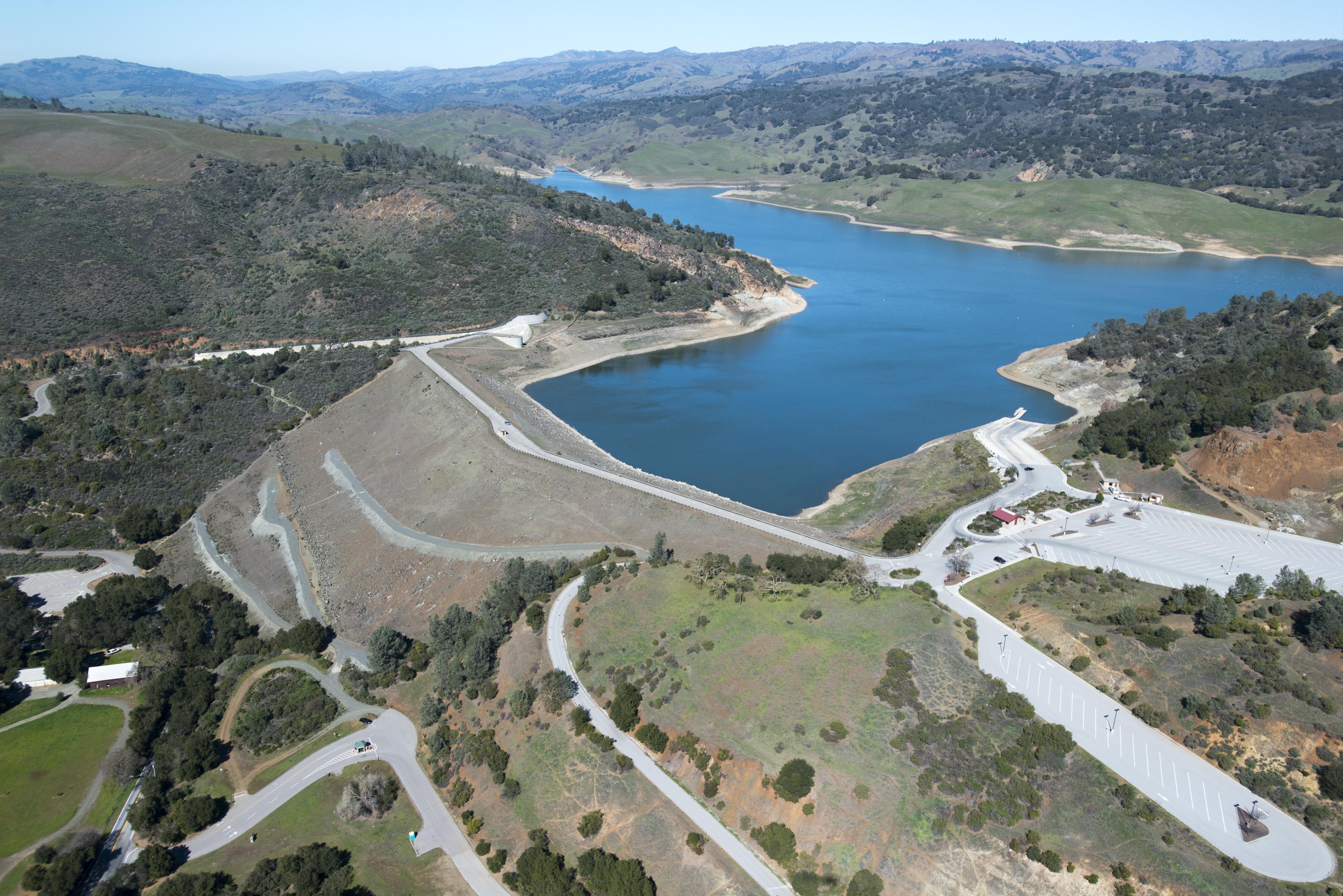
Anderson Reservoir is currently limited to about 3% of its capacity due to seismic concerns (see News and Updates tab below for current operating capacity), costing Santa Clara County valuable drinking water resources. This project covers earthquake retrofitting of Anderson Dam to improve reliability and safety, and returns the reservoir to its original storage capacity.

*This project was voter approved as part of the Safe, Clean Water and Natural Flood Protection Program.

See our video about the Anderson Dam Seismic Retrofit Project

Download the Anderson Dam Seismic Retrofit FAQ

Download the Anderson Dam Seismic Retrofit Update One Pager

Beneath Anderson Dam: Building Stronger, Safer Future

To view the latest update from deep beneath Anderson Dam click here.


September Public Meeting

On Thursday, September 18, 2025, Valley Water held a public meeting to provide an update on the Anderson Dam Seismic Retrofit Project (ADSRP). The presentation covered an update on the Anderson Dam Tunnel Project, and an overview on ADSRP and the procurement process. It was followed by a Question-and-Answer session, where staff engaged with community members.

Meeting Recording

Meeting Presentation

Display Boards


Anderson Dam Seismic Retrofit Project Final Environmental Impact Report 

Pursuant to the California Environmental Quality Act, the Santa Clara Valley Water District (Valley Water), as the lead agency for the proposed Anderson Dam Seismic Retrofit Project (Project), has completed the Final Environmental Impact Report (EIR) to evaluate the environmental impacts of the Project. The Final EIR was prepared in compliance with the California Environmental Quality Act (CEQA) and the State CEQA Guidelines (Cal. Code Regs., § 15000 et seq.). On January 31, 2025, the Final EIR was released and made available to the public. The Final EIR includes responses to comments received on the Project’s Draft EIR and Partially Recirculated Draft EIR. On February 25, 2025, the Valley Water Board of Directors approved resolutions to certify the Final Environmental Impact Report, approve the engineer's report for the Anderson Dam Seismic Retrofit Project and approve the environmentally superior alternative described in the EIR. 

The decision followed a public hearing and is an important step in Valley Water's effort to rebuild Anderson Dam. 

The final EIR covers all parts of the Anderson Dam Seismic Retrofit Project include,

  • Retrofitting and upgrading the dam and its facilities
  • Conservation measures to reduce negative environmental impacts
  • Programs for monitoring, operations and maintenance, and adaptive management


The Final EIR is available through Valley Water’s Public Review Document Page linked here: https://www.valleywater.org/public-review-documents. 


Anderson Dam Tunnel Project Update

The construction of the Diversion Outlet Structure slabs and walls was successfully completed in April 2024 and the construction of the Diversion Outlet Structure roof was completed in June 2024. Work continues on final features such as guardrails and stairs on the structure.

In February 2024, Valley Water achieved a significant project construction milestone with the completion of the excavation of the 24-foot diameter Low-Level Outlet Tunnel. In August 2024, an 8-foot diameter Micro-Tunnel Boring Machine (MTBM) was launched to advance the lake tap for the stage 1 diversion, completing the tunneling operations for the Anderson Dam Tunnel Project. The MTBM was retrieved from the reservoir in October 2024 followed by installation of the lake tap trash rack and downstream bulkhead on the 8-foot diameter lake tap steel pipe. 

The Coyote Creek North Channel riprap lining installation and labyrinth weir were both completed as 2024 ended. At the start of 2025, steel installation began for the structural tunnel lining. 

ADSRP Construction Contractor Prequalification

Publish Date: December, 2024

For more information click here

Santa Clara Valley Water District (Valley Water) has determined that all General Contractors wishing to bid on the Anderson Dam Seismic Retrofit Project (ADSRP or Project) must be prequalified in order to be invited to submit a bid on the Project. Interested Prime Contractors were encouraged to attend the ASRDP Industry Day on October 18, 2024, the Request for Prequalification Application (RFPA) has been published in PlanetBids. Here is the link to access the Project's page in PlantBids Vendor Portal. An optional Prequalification Conference was held via zoom on December 18, 2024 at 10 a.m. The Zoom address can be accessed in the Project's PlanetBids page, Bid Information tab.

During the RFPA process, all questions must be submitted individually to the Project's PlanetBids page in the Q&A tab. The RFPA period closes on February 19, 2025. Valley Water will finalize and post the list of Prequalified Bidders on May 28, 2025. 


Take a tour of the Anderson Dam and Tunnel Project


What's going on at Anderson?

Our largest water reservoir has been drained while we retrofit it to withstand a large earthquake. Learn more about the project's timeline and how our region can benefit from a reconstructed Anderson Dam.

Anderson Dam Tunnel Project Groundbreaking Ceremony

On July 7, 2021, Valley Water held a groundbreaking ceremony for the Anderson Dam Tunnel project. To view the ceremony recording, please see below for the video links.

  • Facebook Live Recording


Alternate recreational areas 

While the Anderson Dam Tunnel Project is under construction, large portions of the Anderson Lake County Park will remain open, including the Live Oak Picnic area, the Rosendin area, the Anderson Lake Park Visitor Center and the Coyote Creek Parkway. However, some areas of the park will be closed, impacting recreational activities such as angling, boating, hiking and picnicking around the dam and reservoir. These activities will be limited or completely closed.

During construction, please check out these alternative recreational spots nearby: 

  • Coyote Lake Harvey Bear Ranch County Park. Located just upstream of Anderson Reservoir, the park provides power and non-power boating, fishing, hiking, picnicking, nature trails, camping and biking opportunities around Valley Water's Coyote Reservoir.
  • Calero County Park. Boating, fishing, hiking and picnicking is available. The park surrounds the nearby Calero Reservoir.
  • Henry Coe State Park. Located about three miles east of Anderson Reservoir, the park is the largest state park in northern California. It protects and preserves 87,000 acres of scenic hills and mountain ridges in the Diablo Mountain Ridge. The largely undeveloped park welcomes backpackers, equestrians, mountain bikers, day hikers and anyone seeking solitude in a nearly untouched setting.
  • Coyote Valley Open Space Preserve. This preserve offers a scenic overlook from the western edge of the Coyote Valley in addition to multi-use trails and picnicking areas.
  • Rancho Canada del Oro Open Space Preserve. Located in the foothills of the Santa Cruz mountains in South Santa Clara County, the preserve has 12 miles of easy to challenging trails. The multi-use trails are open to hikers, mountain bikers and equestrians.

For a listing of city parks and trails in Morgan Trails, visit the Parks and Open Space page on the city of Morgan Hill's web site. 

Lowering of Anderson Reservoir

Valley Water began lowering water levels in Anderson Reservoir on Oct. 1, 2020, to comply with an order from the Federal Energy Regulatory Commission (FERC).  In mid-December 2020, water levels in Anderson Reservoir were lowered to 3% of capacity, the lowest level that can be reached through the existing outlet tunnel.

Valley Water’s 42-page draining plan can be found here. The plan includes building a 1,700-foot-long tunnel, up to 24-feet in diameter, on the left side of the dam looking towards the reservoir. The new tunnel will increase Valley Water’s ability to release water from the reservoir during an emergency by five-fold.

Read more about your water supply questions at Valley Water News and FAQ Sheet.

Valley Water requested recreational closure of Anderson Reservoir beginning Oct. 1, 2020, continuing throughout the life of the project.

Did you miss any of our public meetings?

Valley Water videos each of its meetings, virtual and the ones in person. The public can view the meetings through Valley Water’s You Tube channel.

  • February 20, 2025 - Anderson Dam Seismic Retrofit Project Final EIR Public Meeting
  • June 6, 2024 - Anderson Dam Seismic Retrofit Project Public Meeting
  • Oct. 4, 2023 - Presentation on the Draft Environmental Impact Report.
  • May 24, 2023: Progress of the Anderson Dam Seismic Retrofit and Tunnel projects.
  • June 22, 2022: Anderson Dam Seismic Retrofit Project Update
  • May 19, 2021: Anderson Dam Tunnel Project Pre-construction Meeting
  • Feb. 18, 2021: Borello Ranch Estates and Alicante Ranch
  • Sept. 17, 2020: Anderson Reservoir Dewatering and Tunnel Project Virtual Public Meeting
  • Sept. 9, 2020: Holiday Lake Estates Virtual Public Meeting
  • May 28, 2020: Anderson Dam Retrofit Project Virtual Meeting
  • April 10, 2019: Anderson Dam Retrofit Project Public Meeting at the Morgan Hill Community Center.
  • Oct. 24, 2018: Anderson Dam Retrofit Project Public Meeting at the Morgan Hill Community Center.
  • June 4, 2018:Anderson Dam Retrofit Project Public Meeting at the Morgan Hill Community Center.
  • Sept. 13, 2017: Anderson Dam Retrofit Project Public Meeting at the Morgan Hill Community Center

Updated February 2025

For more information:

  • Jiana Escobar, (408) 630-2266
  • Sign up to receive project updates via email.
  • Sign up to attend a Water Infrastructure Bus Tour.
 

Beneath Anderson Dam: Building Stronger, Safer Future

To view the latest update from deep beneath Anderson Dam click here.


September Public Meeting

On Thursday, September 18, 2025, Valley Water held a public meeting to provide an update on the Anderson Dam Seismic Retrofit Project (ADSRP). The presentation covered an update on the Anderson Dam Tunnel Project, and an overview on ADSRP and the procurement process. It was followed by a Question-and-Answer session, where staff engaged with community members.

Meeting Recording

Meeting Presentation

Display Boards


Anderson Dam Seismic Retrofit Project Final Environmental Impact Report 

Pursuant to the California Environmental Quality Act, the Santa Clara Valley Water District (Valley Water), as the lead agency for the proposed Anderson Dam Seismic Retrofit Project (Project), has completed the Final Environmental Impact Report (EIR) to evaluate the environmental impacts of the Project. The Final EIR was prepared in compliance with the California Environmental Quality Act (CEQA) and the State CEQA Guidelines (Cal. Code Regs., § 15000 et seq.). On January 31, 2025, the Final EIR was released and made available to the public. The Final EIR includes responses to comments received on the Project’s Draft EIR and Partially Recirculated Draft EIR. On February 25, 2025, the Valley Water Board of Directors approved resolutions to certify the Final Environmental Impact Report, approve the engineer's report for the Anderson Dam Seismic Retrofit Project and approve the environmentally superior alternative described in the EIR. 

The decision followed a public hearing and is an important step in Valley Water's effort to rebuild Anderson Dam. 

The final EIR covers all parts of the Anderson Dam Seismic Retrofit Project include,

  • Retrofitting and upgrading the dam and its facilities
  • Conservation measures to reduce negative environmental impacts
  • Programs for monitoring, operations and maintenance, and adaptive management


The Final EIR is available through Valley Water’s Public Review Document Page linked here: https://www.valleywater.org/public-review-documents. 


Anderson Dam Tunnel Project Update

The construction of the Diversion Outlet Structure slabs and walls was successfully completed in April 2024 and the construction of the Diversion Outlet Structure roof was completed in June 2024. Work continues on final features such as guardrails and stairs on the structure.

In February 2024, Valley Water achieved a significant project construction milestone with the completion of the excavation of the 24-foot diameter Low-Level Outlet Tunnel. In August 2024, an 8-foot diameter Micro-Tunnel Boring Machine (MTBM) was launched to advance the lake tap for the stage 1 diversion, completing the tunneling operations for the Anderson Dam Tunnel Project. The MTBM was retrieved from the reservoir in October 2024 followed by installation of the lake tap trash rack and downstream bulkhead on the 8-foot diameter lake tap steel pipe. 

The Coyote Creek North Channel riprap lining installation and labyrinth weir were both completed as 2024 ended. At the start of 2025, steel installation began for the structural tunnel lining. 

ADSRP Construction Contractor Prequalification

Publish Date: December, 2024

For more information click here

Santa Clara Valley Water District (Valley Water) has determined that all General Contractors wishing to bid on the Anderson Dam Seismic Retrofit Project (ADSRP or Project) must be prequalified in order to be invited to submit a bid on the Project. Interested Prime Contractors were encouraged to attend the ASRDP Industry Day on October 18, 2024, the Request for Prequalification Application (RFPA) has been published in PlanetBids. Here is the link to access the Project's page in PlantBids Vendor Portal. An optional Prequalification Conference was held via zoom on December 18, 2024 at 10 a.m. The Zoom address can be accessed in the Project's PlanetBids page, Bid Information tab.

During the RFPA process, all questions must be submitted individually to the Project's PlanetBids page in the Q&A tab. The RFPA period closes on February 19, 2025. Valley Water will finalize and post the list of Prequalified Bidders on May 28, 2025. 


Take a tour of the Anderson Dam and Tunnel Project


What's going on at Anderson?

Our largest water reservoir has been drained while we retrofit it to withstand a large earthquake. Learn more about the project's timeline and how our region can benefit from a reconstructed Anderson Dam.

Anderson Dam Tunnel Project Groundbreaking Ceremony

On July 7, 2021, Valley Water held a groundbreaking ceremony for the Anderson Dam Tunnel project. To view the ceremony recording, please see below for the video links.

  • Facebook Live Recording


Alternate recreational areas 

While the Anderson Dam Tunnel Project is under construction, large portions of the Anderson Lake County Park will remain open, including the Live Oak Picnic area, the Rosendin area, the Anderson Lake Park Visitor Center and the Coyote Creek Parkway. However, some areas of the park will be closed, impacting recreational activities such as angling, boating, hiking and picnicking around the dam and reservoir. These activities will be limited or completely closed.

During construction, please check out these alternative recreational spots nearby: 

  • Coyote Lake Harvey Bear Ranch County Park. Located just upstream of Anderson Reservoir, the park provides power and non-power boating, fishing, hiking, picnicking, nature trails, camping and biking opportunities around Valley Water's Coyote Reservoir.
  • Calero County Park. Boating, fishing, hiking and picnicking is available. The park surrounds the nearby Calero Reservoir.
  • Henry Coe State Park. Located about three miles east of Anderson Reservoir, the park is the largest state park in northern California. It protects and preserves 87,000 acres of scenic hills and mountain ridges in the Diablo Mountain Ridge. The largely undeveloped park welcomes backpackers, equestrians, mountain bikers, day hikers and anyone seeking solitude in a nearly untouched setting.
  • Coyote Valley Open Space Preserve. This preserve offers a scenic overlook from the western edge of the Coyote Valley in addition to multi-use trails and picnicking areas.
  • Rancho Canada del Oro Open Space Preserve. Located in the foothills of the Santa Cruz mountains in South Santa Clara County, the preserve has 12 miles of easy to challenging trails. The multi-use trails are open to hikers, mountain bikers and equestrians.

For a listing of city parks and trails in Morgan Trails, visit the Parks and Open Space page on the city of Morgan Hill's web site. 

Lowering of Anderson Reservoir

Valley Water began lowering water levels in Anderson Reservoir on Oct. 1, 2020, to comply with an order from the Federal Energy Regulatory Commission (FERC).  In mid-December 2020, water levels in Anderson Reservoir were lowered to 3% of capacity, the lowest level that can be reached through the existing outlet tunnel.

Valley Water’s 42-page draining plan can be found here. The plan includes building a 1,700-foot-long tunnel, up to 24-feet in diameter, on the left side of the dam looking towards the reservoir. The new tunnel will increase Valley Water’s ability to release water from the reservoir during an emergency by five-fold.

Read more about your water supply questions at Valley Water News and FAQ Sheet.

Valley Water requested recreational closure of Anderson Reservoir beginning Oct. 1, 2020, continuing throughout the life of the project.

Did you miss any of our public meetings?

Valley Water videos each of its meetings, virtual and the ones in person. The public can view the meetings through Valley Water’s You Tube channel.

  • February 20, 2025 - Anderson Dam Seismic Retrofit Project Final EIR Public Meeting
  • June 6, 2024 - Anderson Dam Seismic Retrofit Project Public Meeting
  • Oct. 4, 2023 - Presentation on the Draft Environmental Impact Report.
  • May 24, 2023: Progress of the Anderson Dam Seismic Retrofit and Tunnel projects.
  • June 22, 2022: Anderson Dam Seismic Retrofit Project Update
  • May 19, 2021: Anderson Dam Tunnel Project Pre-construction Meeting
  • Feb. 18, 2021: Borello Ranch Estates and Alicante Ranch
  • Sept. 17, 2020: Anderson Reservoir Dewatering and Tunnel Project Virtual Public Meeting
  • Sept. 9, 2020: Holiday Lake Estates Virtual Public Meeting
  • May 28, 2020: Anderson Dam Retrofit Project Virtual Meeting
  • April 10, 2019: Anderson Dam Retrofit Project Public Meeting at the Morgan Hill Community Center.
  • Oct. 24, 2018: Anderson Dam Retrofit Project Public Meeting at the Morgan Hill Community Center.
  • June 4, 2018:Anderson Dam Retrofit Project Public Meeting at the Morgan Hill Community Center.
  • Sept. 13, 2017: Anderson Dam Retrofit Project Public Meeting at the Morgan Hill Community Center

Updated February 2025

For more information:

  • Jiana Escobar, (408) 630-2266
  • Sign up to receive project updates via email.
  • Sign up to attend a Water Infrastructure Bus Tour.


Informational materials:

  • Anderson Dam Seismic Retrofit Project Update
  • Anderson Dam Seismic Retrofit Project FAQ - September 2024
  • Public Notice for Plan Distribution - Hoot Owl Way
  • Valley Water Draft Relocation Plan Hoot Owl
  • Anderson Dam Seismic Retrofit Project FAQ - January 2022
  • Anderson Dam Water Supply FAQ
  • FERC Order Dam Safety Directives
  • FERC Order Compliance Project - Engineers Report - June 2020
  • Anderson Dam Project Shell - May 2020
  • Anderson Project FAQ - March 2020
  • Anderson Dam Neighborhood Update - March 2019
  • Anderson Dam Seismic Retrofit Project Fact Sheet
  • Notice of Preparation and Initial Study
  • Anderson Dam Planning Study Report
  • Q&A from September 9th and 17th Virtual Public Meetings


Anderson Dam Seismic Retrofit Project Public Meeting Materials February 20, 2025

  • PowerPoint Presentation (PDF)

Anderson Dam Seismic Retrofit Project Public Meeting Materials June 6, 2024

  • PowerPoint Presentation

Anderson Dam Draft Environmental Impact Report Virtual Meeting Materials October 4, 2023

  • PowerPoint Presentation (PDF)

Anderson Dam Virtual Meeting Materials February 18, 2021

  • Agenda
  • PowerPoint Presentation (PDF)

Anderson Dam Virtual Meeting Materials September 17, 2020

  • Agenda
  • PowerPoint Presentation

Anderson Dam Virtual Meeting Materials May 28, 2020

  • Agenda
  • Project Shell - May 2020
  • PowerPoint Presentation

Materials from Past Anderson Dam Seismic Retrofit Public Meetings

Materials from Community Update Meeting Wednesday, April 10, 2019:

  • Agenda
  • PowerPoint Presentation (PDF)

Materials from Community Update Meeting Monday, June 4, 2018:

  • Agenda
  • Project Description
  • Updated Project FAQ
  • PowerPoint Presentation (PDF)

Materials from Community Update Meeting, Wednesday, October 24, 2018:

  • Agenda
  • Presentation
  • Frequently Asked Questions
  • Watch video recording of the meeting

Materials from Community Update Meeting Wednesday, Sept. 13, 2017:

  • Agenda
  • Project Description
  • Updated Project FAQ
  • PowerPoint Presentation (PDF)
  • Construction Sequence animation (PPT)
  • Click here to view a video of the meeting

Materials from the Anderson Dam Seismic Retrofit Project 
Public Meeting on March 22, 2017:

  • Agenda
  • Project Description
  • Updated Project FAQ
  • PowerPoint Presentation 

Safe, Clean Water Program Documents

  • FY25 Annual Report
  • All annual reports, annual IMC audit reports and independent audits

FY22-36 Key Performance Indicator for the Safe, Clean Water Program

  1. Provide portion of funds, up to $54.1 million, to help restore full operating reservoir capacity of 90,373 acre-feet.

Benefits

  • Brings the dam into compliance with today’s seismic standards
  • Increases reliability and safety of our area’s largest reservoir by protecting it from earthquakes
  • Eliminates operational restrictions issued by the two regulatory agencies—the Federal Energy Regulatory Commission (FERC) and the California Department of Water Resources Division of Safety of Dams (DSOD). In February 2020, FERC directed Valley Water to begin safely lowering the reservoir to an elevation of 488 feet (essentially almost emptying the reservoir) beginning October 1, 2020. This project would restore Anderson
    Reservoir to its full capacity of approximately 90,373 acre-feet of water storage for our current and future water supply
  • Ensures compliance with environmental laws and regulations
  • Enhances native fish and wildlife habitat with spawning gravel, instream complexities for habitat, and riparian corridor enhancement
  • Minimizes the risk of uncontrollable releases from the reservoir, which could cause downstream flooding

Geographic Area of Benefit 

Countywide 

Anderson Dam creates the county’s largest surface water reservoir—Anderson Reservoir— which stores local rainfall runoff and imported water from the Central Valley Project. The reservoir is an important water source for treatment plants and the recharge of the groundwater basin. Besides restoring drinking water supplies, the upgrade also supports compliance with environmental regulations. Valley Water’s regular reservoir releases ensure that downstream habitat has healthy flows and temperatures to sustain wildlife.

A breach of Anderson Dam at full capacity could have catastrophic consequences, including inundation of surrounding land more than 30 miles northwest to San Francisco Bay, and more than 40 miles southeast to Monterey Bay.

In December 2016, the Board was informed by Valley Water staff that findings from the geotechnical and geologic investigations performed during the project’s design phase led to the conclusion that a more extensive dam retrofit than had originally been envisioned would have to be performed. Further, the Board was informed that the more extensive retrofit work would double the previous project’s estimated cost. Valley Water staff presented the Board with a water supply cost-benefit analysis that showed the benefits of the more extensive retrofit project significantly outweighed the cost of not proceeding with the retrofit, which would require Valley Water to purchase additional imported water every year to make up for the loss of long-term storage at Anderson Reservoir. Based upon this information and analysis, the Board directed Valley Water to continue work on this critical infrastructure project.

Anderson Reservoir is the largest of the 10 Valley Water reservoirs and provides a reliable supply of water to Santa Clara County. It has a total storage capacity of approximately 90,000 acre-feet (one acre-foot is 325,851 gallons of water, enough to serve two households of five for one year). Anderson Dam was built in 1950 and named after the key founder and first president of Valley Water, Leroy Anderson. A long, deep natural gorge located three miles east of U.S. 101 in Morgan Hill provided a suitable dam site. 

Findings of the original seismic stability evaluation completed in 2011 on Anderson Dam indicated that the downstream and upstream embankments could become unstable during a very large magnitude earthquake and the rupture of faults underlying the dam may have adverse impact on the outlet pipe and intake structure.

About the Safe, Clean Water and Natural Flood Protection Program

In November 2020, voters in Santa Clara County overwhelmingly approved Measure S, a renewal of Valley Water’s Safe, Clean Water and Natural Flood Protection Program.

The program was first passed by voters in 2000 as the Clean, Safe Creeks and Natural Flood Protection Plan, then again in 2012 as the Safe, Clean Water and Natural Flood Protection Program. The renewal of the Safe, Clean Water Program will continue to provide approximately $47 million annually for local projects that deliver safe, clean water, natural flood protection, and environmental stewardship to all the communities we serve in Santa Clara County.

While evaluating ways to improve the 2012 program, Valley Water gathered feedback from more than 21,000 community members. That helped Valley Water create the six priorities for the renewed Safe, Clean Water Program, which are:

Priority A: Ensure a Safe, Reliable Water Supply

Priority B: Reduce Toxins, Hazards and Contaminants in our Waterways

Priority C: Protect our Water Supply and Dams from Earthquakes and Other Natural Disasters

Priority D: Restore Wildlife Habitat and Provide Open Space

Priority E: Provide Flood Protection to Homes, Businesses, Schools, Streets and Highways

Priority F: Support Public Health and Public Safety for Our Community

Each year, Valley Water prepares a report providing a progress update for each of these program priorities, along with fiscal year accomplishments.

To ensure transparency and accountability to the voters, the ballot measure also created an Independent Monitoring Committee, appointed by the Santa Clara Valley Water District Board of Directors. The Independent Monitoring Committee annually reviews the program’s progress to ensure the outcomes are achieved in a cost-efficient manner and reports its findings to the Board. Additionally, the IMC also reviews each proposed 5-year implementation plan prior to its submittal for Board approval.

In addition, the program requires three independent audits.

View the Safe, Clean Water Program’s annual reports, annual IMC audit reports, and independent audits, including a staff response, on the Valley Water website.

Footer Top

    Valley Water Logo
  • Report an Issue
  • Contact Us
  • Services & Support
  • Join our Newsletter
    Valley Water Logo
  • Join our Newsletter
  • Report an Issue
  • Contact Us
  • Services & Support

Footer

  • For Residents
    • Water Charges
    • Grants and Rebates
    • Water Conservation
    • Projects and Plans
    • Outdoor Survey
    • Watersavings.org
    • Water Quality
    • Water Supply Planning
  • In an Emergency
    • Get Flood Ready
    • Levee Safety
    • Dam Safety Program
    • Flood Emergency Action Plan
    • Local Hazard Mitigation Area
    • Climate Change Action Plan
  • Data & Resources
    • GIS Data
    • Popular Documents
    • HEC-2 Data Library
    • Surface Water Data Portal
    • Water Sensor ALERT
    • Find My Water Retailer
  • About Valley Water
    • Finance & Budget
    • Board of Directors
    • Board Meetings & Agendas
    • Committees
    • Board Governance Policies
    • Careers
    • Internships
  • In the District
    • Permits
    • Report a Problem
    • Contact Us
    • Purchasing and Contracts
    • Construction Administration
    • Business Resources
  • Learning Center
    • Water 101 Academy
    • Public Tours
    • Adopt a Creek
Santa Clara Valley Water District 2025
Pollution Hotline 888-510-5151
Phone: 408-265-2600